
The banking system in India is one of the strongest and widest in the world, and the very foundations of the banking system are the Public Sector Banks in India. These state-owned financial institutions are the foundation of the economy of the country as they offer financial services to hundreds of millions of citizens – in the remote villages and in the metropolitan cities.
A government bank is defined as a bank where the Government of India has not less than a 51 per cent stake and such banks are regulated by the Reserve Bank of India (RBI). Currently, there are only 12 such banks in India and each has a distinct history, service offering, and a national presence. Need to take a bank exam, track the stocks of PSUs, or just want to select the appropriate bank, this comprehensive guide to the Public Sector Banks in India 2026 is your one-stop destination.
Also Read – Best Refer and Earn Apps
Understanding Public Sector Banks (PSBs) in India
- India Commercial Banks Public Sector Banks are commercial banks in which the Government of India has a majority ownership of more than 50 percent of the paid-up share capital.
- The Reserve Bank of India (RBI) regulates these banks and the Ministry of Finance supervises them.
- These state sector banks operate under the regulation of RBI and under the supervision of the Ministry of Finance and assist in priority sectors such as agriculture, MSMEs and financial inclusion.
- Prior to the merger in 2019, there were 27 public sector banks in India. Following the consolidation, this was narrowed down to 12.
- Most PSBs are traded in stock markets (NSE and BSE), and are thus available to retail investors.
- PSBs process government schemes, pension, Direct Benefit Transfers (DBT) and subsidy payments at a large scale.
- They have been regarded as very safe as far as deposits are concerned as there is sovereign backing and DICGC coverage of up to 5 lakh per depositor.
Role of PSU Banks in the Indian Economy
- Financial Inclusion: The PSU banks are taking crores of unbanked citizens into the formal banking system with programs such as PM Jan Dhan Yojana.
- Priority Sector Lending: They are required to lend to agriculture, MSMEs, education, and housing – areas that are traditionally under-served by the private banks.
- Government Scheme Implementation: PSBs make subsidies, pensions and welfare payments directly to the beneficiaries.
- Employment Generator: PSU banks are considered to be one of the biggest employers in the organized sector of the country.
- Rural Penetration: PSBs are spread in all the districts and tehsils where the private banks have no representation.
- Economic Stability: Public sector banks are significant in financial inclusion as well as implementation of government schemes; they are stabilizers in times of economic recession.
- To its credit, Infrastructure: PSBs are big funders of roads, power, rail and other key infrastructure developments.
Why Public Sector Banks Matter in 2026
- With the 12 PSU banks, they have become instrumental in aiding government schemes, rural banking, and digital inclusion in the nation.
- The PSBs have become competitive to the private banks thanks to upgrades in digital banking, such as mobile applications, integration of UPI, and internet banking.
- PSBs still have one of the most competitive interest rates on deposits (as of March 2026, Canara Bank and PNB are the PSU leaders with 7.10%7.50% on special 444/555-day tenures to seniors).
- The better quality of assets, where the NPA (Non-Performing Assets) ratios are steadily decreasing all across the board, are an indication of a healthier, more robust PSU banking industry.
- Public sector banks 2026 are a blend of government assistance and contemporary digital services, which may be appealing to both depositors and borrowers with a safety-related mindset.
- The career prospect in PSBs is colossal and with lakhs of applicants, taking annual bank exams such as IBPS PO, IBPS Clerk and SBI PO, the situation is unlikely to change.
How Many Public Sector Banks Are There in India (2026)?
- As of 1 April 2026, there are 12 public sector banks in India.
- In India, 27 public sector banks existed, which, as of August 2019, were merged into bigger banks. Following the mergers, the public sector banks have a total of 12.
- The 12 banks consist of large banks being created through mergers (such as PNB, Canara, Union Bank) and smaller independent banks (such as Punjab and Sind Bank).
- These banks are jointly run with more than 1,00,000+ branches and 1,50,000+ ATMs spread over India.
- The Government of India owns between 57% (SBI) and more than 90% (Bank of Maharashtra) of these banks.
The Official List of 12 Public Sector Banks in India 2026
1. State Bank of India (SBI)
- Headquarters: Mumbai, Maharashtra
- Founded: 1 July 1955 (origins trace to Bank of Calcutta, 1806)
- Market Capitalization (2026): ₹9,04,047 crore (approx.)
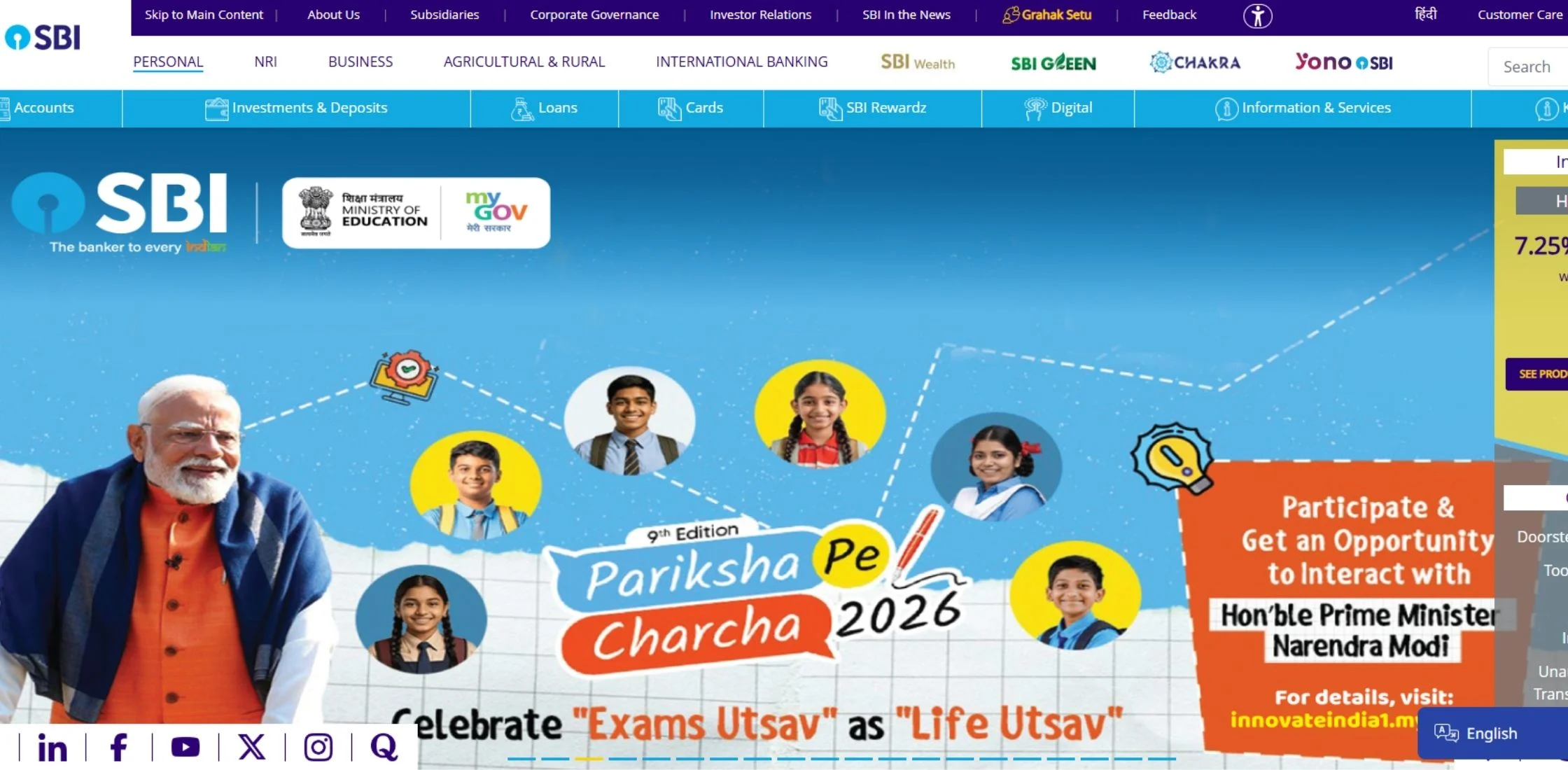
The biggest among all the Public Sector Banks in India and the biggest bank in the country is the State Bank of India. It boasts of a huge customer base of 48 crore, 22,500+ branches and 63,580+ ATM, throughout the country. It has more than 241 offices worldwide in 29 countries. Everything, including home loans to the middle-class families, and mega infrastructure projects, is funded by SBI. Its balance sheet has gone beyond 61 lakh crore and it has an estimated 22 percentage of the banking market share of deposits in India.
Key Services:
- Home Loans & Personal Loans
- Agricultural & Kisan Credit Cards
- Corporate & Trade Finance
- Digital Banking via YONO App
Branch Network & Reach: 22,500+ branches; pan-India presence including rural areas
Why It Is Popular: Largest bank, government-backed, widest reach
Website: www.sbi.co.in
2. Punjab National Bank (PNB)
- Headquarters: New Delhi
- Founded: 19 May 1894
- Market Capitalization (2026): ₹1,38,834 crore (approx.)
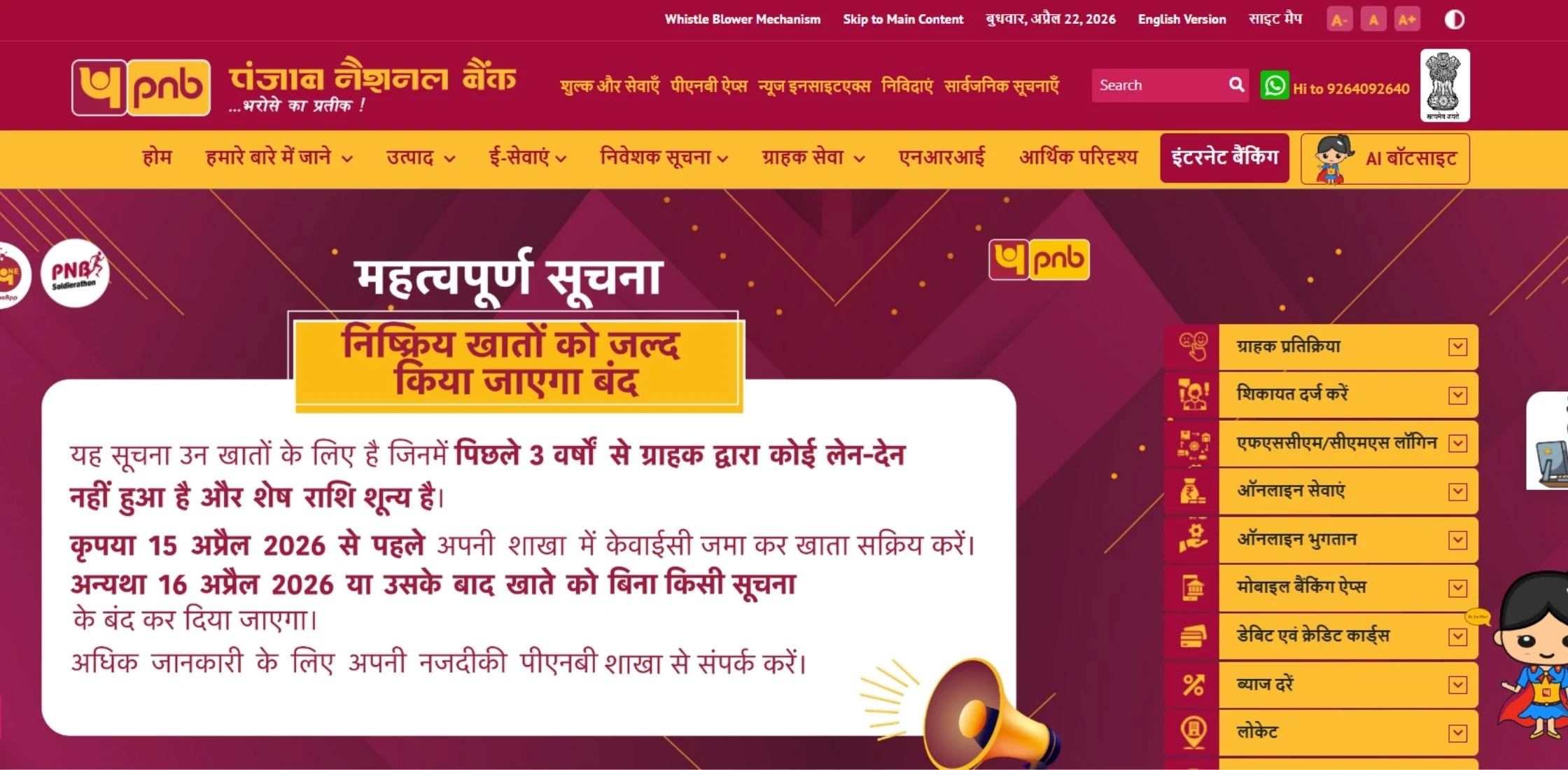
The second largest Public Sector Bank in India after SBI is Punjab National Bank which is the brainchild of such visionaries as Lala Lajpat Rai. It offers personal, corporate and agricultural finance services and is heavily engaged in lending in the priority sectors such as MSME and farm loans. As of Q1 FY2026, it had expanded its business worldwide to ₹27.19 lakh crore which is an increment of 11.6 percent annually. PNB has a stake of around 73% by the Government of India. It has been hastening its digitalization with an excellent mobile and internet banking package.
Key Services:
- MSME & Business Loans
- Education & Housing Finance
- NRI & Forex Services
- PNB ONE Mobile Banking
Branch Network & Reach: 10,000+ branches across all Indian states
Why It Is Popular: Legacy heritage, strong MSME lending, affordable rates
Website: www.pnbindia.in
3. Bank of Baroda (BOB)
- Headquarters: Vadodara, Gujarat
- Founded: 20 July 1908
- Market Capitalization (2026): ₹1,49,710 crore (approx.)
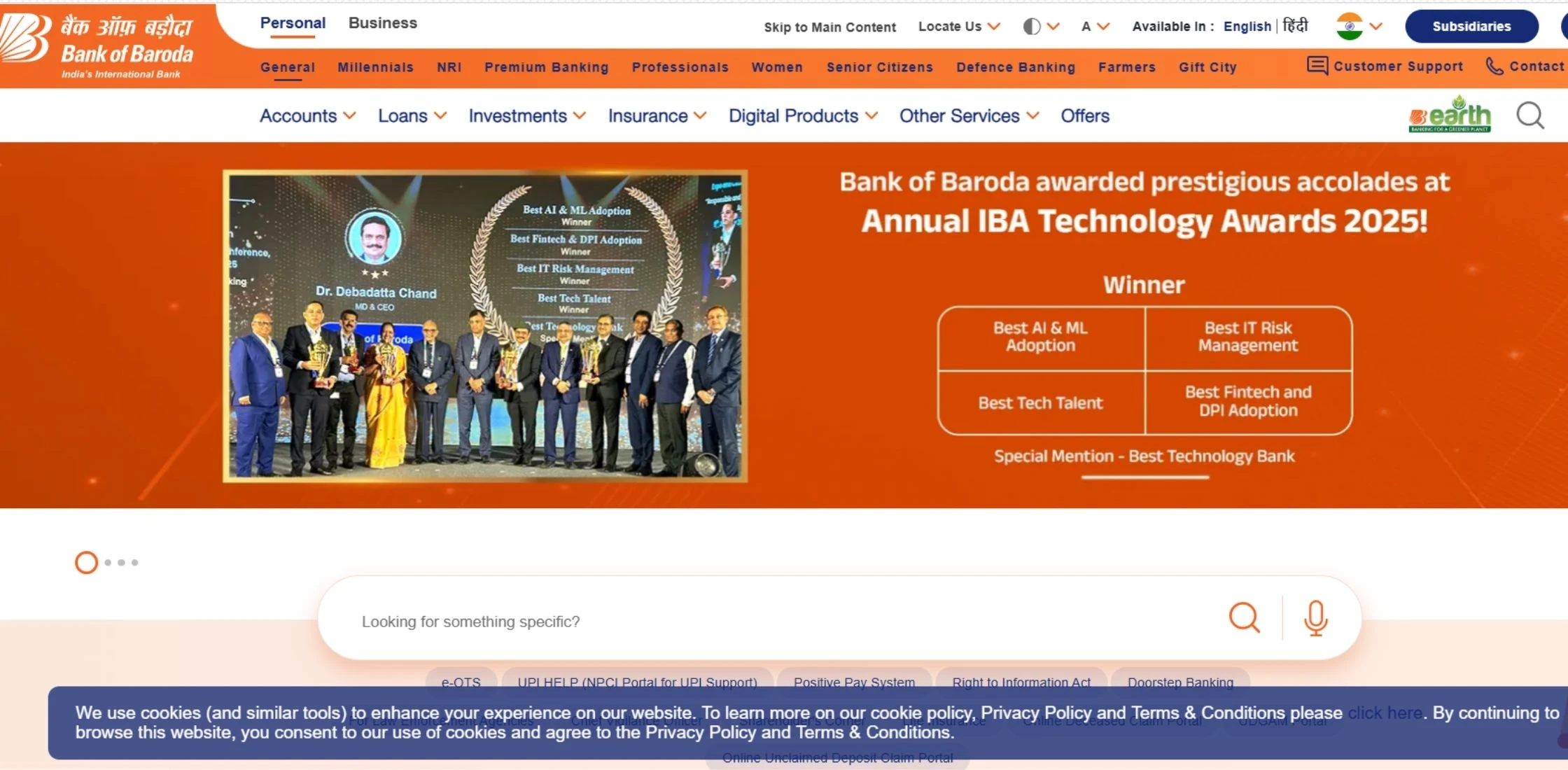
Bank of Baroda is one of the large Public Sector Banks in India having a strong presence in the international market, which provides its services in the personal, corporate and international banking sectors. It has acquired Vijaya Bank and Dena Bank in 2019 in order to emerge as a much larger bank. It is still the best among the PSU banks in offering NRI services and international banking. The Government of India is a shareholder of about 63.9%. One of the most active PSBs is BOB as it has a presence in 20+ countries worldwide.
Key Services:
- NRI & International Banking
- Home, Auto & Personal Loans
- Trade Finance & Forex
- bob World Mobile App
Branch Network & Reach: 8,200+ domestic branches; 100+ overseas offices in 20+ countries
Why It Is Popular: Best PSU bank for NRI and global trade services
Website: www.bankofbaroda.in
4. Canara Bank
- Headquarters: Bengaluru, Karnataka
- Founded: 1 July 1906
- Market Capitalization (2026): ₹89,000 crore (approx.)
Canara Bank is a Public Sector Bank; it is one of the oldest and the most reliable banks in India with more than 118 years of banking history. It came into being through the amalgamation of the initial Canara Bank and the Syndicate Bank in the year 2020 with the Government owning 62.9 percent. Canara Bank is reputed to be the most digital bank among PSBs. It has also been the leading PSBs in terms of technology adoption, CASA growth and mobile banking penetration. It is also a robust agricultural lender and rural inclusion financial provider.
Key Services:
- Agricultural & Rural Loans
- Digital Banking (Canara ai1 App)
- NRI & FOREX Services
- MSME & Corporate Credit
Branch Network & Reach: 9,600+ branches; strong South India presence
Why It Is Popular: Digital leader, strong South India base, competitive FD rates
Website: www.canarabank.com
5. Union Bank of India
- Headquarters: Mumbai, Maharashtra
- Founded: 11 November 1919
- Market Capitalization (2026): ₹1,44,206 crore (approx.)
The corporation of Union Bank of India was founded in 1919 and the corporate office was opened by Mahatma Gandhi- a great privilege in the history of Indian banking. It is one of the largest Public Sector Banks in India with approximately 9,300 branches after consolidating with Corporation Bank, and Andhra Bank in April 2020. The Government of India is the majority stockholder with about 74.76. The bank also has good financial momentum to maintain as indicated by 9.76% YoY gross advances growth and 7.90% YoY domestic CASA growth as of March 2026.
Key Services:
- Home Loans & Vehicle Finance
- Government Scheme Banking (PMJDY)
- MSME & Corporate Lending
- Union Bank Mobile Banking App
Branch Network & Reach: 9,300+ branches; strong West and South India presence
Why It Is Popular: Competitive home loan rates, strong government schemes reach
Website: www.unionbankofindia.co.in
6. Indian Bank

- Headquarters: Chennai, Tamil Nadu
- Founded: 15 August 1907
- Market Capitalization (2026): ₹1,12,902 crore (approx.)
Indian Bank is a successful mid-sized bank in the family of Public Sector Banks in India. In April 2020, it acquired the Allahabad Bank and became much larger nationwide. By December 2025, the total business of the bank had increased 13.4% to ₹14.30 lakh crore. The increase in the CASA deposits was 19.4% annualized. Indian Bank has gained a good reputation on financial discipline, bettering in the quality of assets, and profitability. It was among just two PSU banks that had an increase in its market cap during the January March 2026 quarter.
Key Services:
- Retail, Agricultural & MSME Loans
- Digital Banking (IndOASIS App)
- International Banking & Trade
- Government & Pension Account Services
Branch Network & Reach: 5,800+ branches; strong South and East India presence
Why It Is Popular: Improving NPA profile, strong digital services, consistent profits
Website: www.indianbank.in
7. Bank of India
- Headquarters: Mumbai, Maharashtra
- Founded: 7 September 1906
- Market Capitalization (2026): ₹73,677 crore (approx.)
One of the oldest and most internationally distributed amongst all Public Sector banks in India is Bank of India that has branches in more than 22 countries. Established in 1906, in Mumbai, by a team of great businessmen, it has been serving millions of people in the history of the Indian economy, which has lasted over 100 years. It had a significant role in expansion of banking to rural India which occurred after independence. The bank particularly is popular in terms of trade finance, foreign exchange facility and remittances by non-residents. It has an inclusive offering of personal finance to big ticket corporate credit.
Key Services:
- International Trade Finance & Forex
- Retail & Housing Loans
- Agricultural Credit (Kisan Credit Card)
- BOI Mobile Banking App
Branch Network & Reach: 5,100+ branches; 54 overseas branches across 22 countries
Why It Is Popular: Strong international presence, reliable forex services
Website: www.bankofindia.co.in
8. UCO Bank
- Headquarters: Kolkata, West Bengal
- Founded: 6 January 1943
- Market Capitalization (2026): ₹36,063 crore (approx.)
UCO Bank is one of the oldest and most reputable Public Sector Banks in India that was started in 1943 in Kolkata by some renowned businessmen and visionaries. Although it is a small PSB in terms of market cap, it has an extensive geographic coverage especially in Eastern and North-Eastern India. The bank provides personal, corporate, rural, MSME, digital and international banking services. It has been several years since UCO Bank has been able to dramatically reduce its NPA levels and is engaged in actively investing into its digital infrastructure and technology stack.
Key Services:
- Personal & Home Loans
- Agricultural & MSME Credit
- NRI & Forex Services
- UCO mBanking Plus App
Branch Network & Reach: 3,000+ branches; dominant in East and Northeast India
Why It Is Popular: Trusted eastern India bank; steadily improving NPA ratios
Website: www.ucobank.com
9. Central Bank of India
- Headquarters: Mumbai, Maharashtra
- Founded: 21 December 1911
- Market Capitalization (2026): ₹33,716 crore (approx.)
The Central Bank of India is the first swadeshi commercial bank in India to be established and has been operating since 1911 with an all- Indian board and management. In 1969, it was nationalised and has been one of the major pillars by the Public Sector Banks in India. The bank has a large range of customers in urban, semi-urban and rural India with a special concentration on government employees, pensioners and small business. Although the Central Bank experienced various issues with asset quality in the past, over recent years, the bank has demonstrated a consistent increase in financial performance and a decrease in NPA.
Key Services:
- Retail Banking & Personal Loans
- Government Employee & Pension Accounts
- Agricultural Finance
- Cent Mobile App
Branch Network & Reach: 4,500+ branches across India
Why It Is Popular: Pioneer swadeshi bank; trusted for pensioner and government accounts
Website: www.centralbankofindia.co.in
10. Indian Overseas Bank
- Headquarters: Chennai, Tamil Nadu
- Founded: 10 February 1937
- Market Capitalization (2026): ₹67,071 crore (approx.)
Indian Overseas Bank (IOB) was established with a particular orientation towards international banking and foreign exchange transactions, which made it an innovator of international trade finance in South India. It is well established in Tamil Nadu and other states in the south. IBD has experienced a robust financial turnaround of high NPAs to better profitability over the past years. In 202526, the bank has greatly modernized its technology and digital services. It is still one of the most available Public Sector Banks to the world wide Tamil and South Indian diaspora.
Key Services:
- NRI & Overseas Remittance
- Home & Educational Loans
- Retail & MSME Banking
- IOB Mobile Banking App
Branch Network & Reach: 3,400+ branches; strong Tamil Nadu and Southeast presence
Why It Is Popular: Best-known PSB among Indian diaspora in Southeast Asia
Website: www.iob.in
11. Punjab & Sind Bank

- Headquarters: New Delhi
- Founded: 24 June 1908
- Market Capitalization (2026): ₹8,500 crore (approx.)
Punjab & Sind Bank is the least market capitalized of the 12 Public Sector Banks in India but has a tremendous historical and cultural meaning. It was established in 1908 and is based in Amritsar by Bhai Vir Singh, Sir Sunder Singh Majithia and Sardar Tarlochan Singh to cater to the farming and trading population of Punjab and Sind. Government of India has a majority of 98% share, which qualifies it as the most government owned PSB. It mainly caters to the northern states with a strong presence in Punjab, Delhi and Haryana, and provides all the retail and MSME banking services.
Key Services:
- Agricultural & Farm Loans
- Small Business & MSME Credit
- Retail Savings & Deposits
- PSB UnIC Mobile App
Branch Network & Reach: 1,550+ branches; concentrated North India focus
Why It Is Popular: Trusted North India community bank with deep Punjabi cultural roots
Website: www.psbindia.com
12. Bank of Maharashtra

- Headquarters: Pune, Maharashtra
- Founded: 16 September 1935
- Market Capitalization (2026): ₹50,402 crore (approx.)
One of the most efficient and well-managed Public Sector Banks in India, Bank of Maharashtra has the best quality of assets and lowest ratio of NPA in the PSU banking segments. It estimated a net profit of 5520 crore in FY25, a phenomenal growth of 36 percent compared to the previous year. As the Government of India is the owner of about 90 percent. Its Project 321 has been able to expand internationally in the country, beyond its Maharashtra stronghold. It has a high CASA ratio and personalised service, which makes it a leading choice of SMEs, retail depositors and people who are seeking gold loans.
Key Services:
- SME & Gold Loans
- Home & Vehicle Finance
- Digital Banking (MahaMobile App)
- Fixed Deposits with Competitive Rates
Branch Network & Reach: 2,600+ branches; strong Maharashtra and Central India presence
Why It Is Popular: Lowest NPA among PSBs; excellent asset quality and profitability record
Website: www.bankofmaharashtra.in
Performance Comparison: PSU Banks vs. Private Sector Banks
Key Differentiators: Ownership, Accountability, and Customer Service
| Parameter | PSU Banks | Private Sector Banks |
| Ownership | Govt. of India (51%+) | Private shareholders |
| Regulatory Body | RBI + Ministry of Finance | RBI |
| Accountability | Public, Parliament oversight | Shareholders & board |
| Customer Service | Improving; branch-heavy | Generally faster, tech-driven |
| Loan Rates | Slightly lower for priority sectors | Market-driven, often higher |
| Safety for Deposits | Very high (sovereign backing) | High (RBI-regulated) |
Market Reach: Rural Penetration of PSU Banks
| Bank | Rural Branches (Approx.) | Key Rural States |
| SBI | 7,000+ | All states, especially UP, MP, Bihar |
| Canara Bank | 2,500+ | Karnataka, Andhra Pradesh, Kerala |
| Bank of India | 1,600+ | Maharashtra, UP, Rajasthan |
| UCO Bank | 1,000+ | West Bengal, Odisha, Assam |
| Bank of Maharashtra | 800+ | Maharashtra, MP, Goa |
| Private Banks (avg.) | Very limited rural branches | Mostly Tier-1 & Tier-2 cities |
Technology Adoption: Private Banks vs. PSU Digital Banking
| Feature | PSU Banks (2026) | Private Banks (2026) |
| Mobile Banking App | All 12 PSBs have apps | More polished UI/UX |
| UPI Integration | Fully integrated | Fully integrated |
| Net Banking | Available for all | Available for all |
| AI Chatbots | Emerging (YONO, bob World) | More mature (iMobile, GPay) |
| Loan Turnaround (Digital) | 2–5 days (improving) | Often under 24 hours |
| Tab-Based Onboarding | Widely adopted | Industry-standard |
Profitability and Asset Quality Trends in 2026
| Bank | Gross NPA (%) 2026 | Net Profit (FY25, ₹ Crore) | Trend |
| SBI | ~2.0% | ₹61,077 | Improving |
| Bank of Maharashtra | ~1.74% | ₹5,520 | Best-in-class |
| Indian Bank | ~3.2% | ₹8,895 | Improving |
| Canara Bank | ~2.35% | ₹15,550 | Improving |
| PNB | ~3.45% | ₹15,400 | Recovering |
| Central Bank of India | ~4.5% | ₹3,100 | Stable |
Top Performing Public Sector Banks: Rankings and Metrics
Ranking by Total Assets and Market Capitalization
| Rank | Bank | Market Cap (₹ Crore, 2026) | Total Assets (Approx.) |
| 1 | SBI | ~9,04,047 | ₹61 lakh crore+ |
| 2 | Bank of Baroda | ~1,49,710 | ₹13 lakh crore |
| 3 | Union Bank of India | ~1,44,206 | ₹11.5 lakh crore |
| 4 | PNB | ~1,38,834 | ₹11 lakh crore |
| 5 | Indian Bank | ~1,12,902 | ₹8 lakh crore |
| 6 | Canara Bank | ~89,000 | ₹16 lakh crore |
| 7 | Bank of Maharashtra | ~50,402 | ₹3.5 lakh crore |
| 8 | Bank of India | ~73,677 | ₹7.5 lakh crore |
| 9 | Indian Overseas Bank | ~67,071 | ₹3.7 lakh crore |
| 10 | UCO Bank | ~36,063 | ₹2.5 lakh crore |
| 11 | Central Bank of India | ~33,716 | ₹3 lakh crore |
| 12 | Punjab & Sind Bank | ~8,500 | ₹40,000 crore |
Identifying the “Big 4” PSU Banks
| Bank | Distinguishing Strength | Govt. Stake |
| SBI | Largest by every metric; pan-India + international | ~57.59% |
| Bank of Baroda | Best NRI & forex services; global reach | ~63.9% |
| Punjab National Bank | 2nd largest; strong MSME & agricultural lending | ~73% |
| Canara Bank | Digital banking leader; strong South India base | ~62.9% |
Evaluating Credit Growth and Financial Stability in 2026
| Bank | Credit Growth (YoY) | CASA Ratio | Capital Adequacy Ratio |
| SBI | ~14% | ~41% | 13.6% |
| PNB | ~11.6% | ~42% | 14.2% |
| Bank of Baroda | ~12% | ~38% | 16.3% |
| Canara Bank | ~10% | ~35% | 14.9% |
| Union Bank | ~9.76% | ~35% | 13.8% |
| Bank of Maharashtra | ~16.87% | ~51% | 18.1% |
Career Opportunities in Public Sector Banks
- Banking Exams: Lakhs of candidates every year compete to get positions through IBPS PO, IBPS Clerk, IBPS SO, SBI PO, SBI Clerk and RBI Grade B exams.
- Job Stability: PSU bank jobs are considered to be one of the most desirable in India due to their stability, job security and government-sponsored benefits.
- Salary and Perks: Probationary Officer (PO) salaries are between 35,000 to 55,000/month with benefits such as HRA, medical allowance and pension.
- Career Development: There is a career ladder through which employees can move up the ranks to become Clerk, then Manager, then General Manager.
- Diversity in Roles: The opportunities include IT, cybersecurity, HR, credit analysis, rural banking officers, marketing, and treasury management.
- Specialist Officers (SO): PSBs periodically take on IT officers, law officers, HR specialists, and agricultural finance officers via special drive.
- Recent Trends: PSBs are increasing their investment in technology, so the need for data analysts, cybersecurity specialists, and bankers with fintech expertise continues to grow.
Future Outlook of Indian Banking
- Public sector banks 2026 are the merger of government support and new digital services, and this integration is only going to enhance in the next few years.
- The Government of India still recapitalizes PSBs, so that they are well capitalized in terms of capital adequacy and their capacity to lend.
- Mergers among smaller PSBs can go on as the government attempts to establish fewer but stronger banking institutions.
- By 202730, AI-powered credit scoring, blockchain-enabled trade finance, and further integration of UPI will revolutionize the way PSBs serve customers.
- The new priorities include green banking and climate finance, with a number of PSBs establishing special lending sustainability departments.
- The frontiers will continue to be rural and semi-urban India where Public Sector Banks in India will continue to have a formidable competitive advantage over their private counterparts.
- The internationalisation of banks (SBI, Bank of Baroda, and Bank of India) will enable the support of the increasing trade and Indian diaspora economy.
Conclusion
The 12 Public Sector Banks in India are much more than mere financial institutions but a tool of national development, financial inclusion and economic empowerment. SBI, with its giant stature, and the agile Bank of Maharashtra, with its distinct advantage to the Indian banking landscape, both have their strengths and bring them to the Indian financial system.
These banks will continue to be on course as India moves toward a 5 trillion economy, lending to farmers, startups, and facilitating digital payments and supporting millions of households. The Public Sector Banks in India have something to offer to all of you, in 2026 and beyond whether you are a depositor looking to save, a borrower looking to obtain cheap credit or a job seeker looking to get a stable career.
Also Read:
FAQs
In 2026, how many Public Sector Banks do we have in India?
As of 2026, there are 12 Public Sector Banks in India, as compared to 27 prior to the 20192020 mergers of consolidations.
What is the biggest Public Sector Bank in India?
The largest is State Bank of India (SBI) which has a market capital of more than 9 lakh crore, 22,500+ branches and a client base of 48 crore.
Will my money be safe in a Public Sector Bank?
Yes. DICGC insures deposits to the tune of ₹5 lakh and the fact that majority of the government is the owner gives the government an implicit sovereign guarantee.
What is a nationalized bank vs a Public Sector Bank?
PSBs are all nationalized banks, although not necessarily technically nationalized. An example is SBI which was established by a different Act. Commonly used however, the two terms mean the same which are 12 government owned banks.
What Public Sector Bank is the best to take out a home loan in 2026?
SBI, Union Bank of India and Bank of Baroda are regarded to be the best in terms of providing home loans in 2026 with competitive interest rates of approximately 8.35%-8.50 per annum.