
Life in the modern world is rather hectic, and one may find that his or her working hours, studies, and life are overwhelming. Trying to keep to deadlines, personal and team commitments, work-life balance, and everything in between, most individuals are flailing in an infinitely growing ocean of tasks and duties. It is no longer possible to cope with the complexity of our lives using the traditional methods of doing everything in our heads or using randomly placed sticky notes.
Answering this problem is to take advantage of intelligently designed, free internet-based tools that will be capable of increasing productivity and will lessen the amount of pressure and stress. It is like these digital assistants have been working 24/7 creating order out of our minds, we tend to become more productive in our work, and allowing machines to take on routine, monotonous tasks that waste a lot of time and energy. The best of all? Some of the greatest productivity tools are completely free, democratizing access to previously highly complex and expensive organizational systems that were previously available only to large corporations.
This article points out ten amazing free online tools, which will help you to change the way you work, study, and you may handle everyday tasks. Whether it is project organization and note taking, time and scheduling, or creative design, these instruments provide all the solutions under one package, which adjust to your distinct requirement and enable you to regain control over your packed routine.
Why Use Free Online Tools?
Online productivity is a revolution because of the ability to organize and be efficient based on freely provided tools online.
Affordable use: These online tools are free to use and are cost-effective as compared to expensive software packages that might be used by students and small business owners who have limited budgets, or by busy parents who have a variety of expenses to meet. One does not have to make heavy investments up front, and tools of productivity are available to all.
Cloud accessibility: These tools sync across all your devices. You may begin a task on one device, e.g. your laptop, and update it on another one, e.g. your phone, and finish it on a third one, e.g. your tablet, and that way be always productive regardless of your position.
Full-featured products: The free software products have features equal to or higher than those of other paid software programs. They vary a lot in scope and intersection, whether it is project management and scheduling, collaborative editing, and creative design, as well as frequently becoming conveniently combined parts of the same workflow.
Easy to use and get going: Most of the tools do not need any technical knowledge or installation. They are easy to use, and since they have an intuitive interface, it takes people minutes to get started, and everyone is freed of the learning process, so you can be productive as soon as possible.
Also Explore: Best Etsy Shop Name Generator Tools
Top 10 Free Online Tools to Simplify Work, Study & Daily Tasks
1. Trello
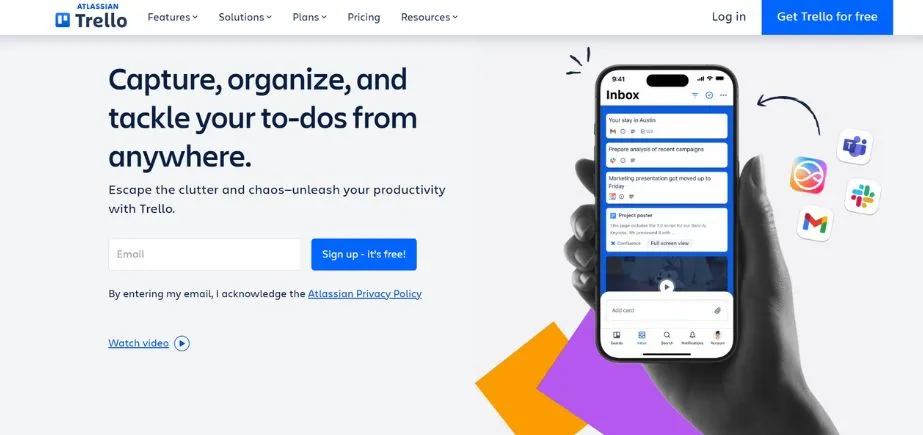
Trello is one of the most versatile Free Online Tools for project management that refers to boards, lists, and cards to enable people and teams to visualize the tasks at hand. Perfect for work-related and academic tasks, it offers the properties to create deadlines, checklists, and co-working. It is also convenient to monitor the work process and plans using its drag-and-drop interface. Regardless of organizing a group activity, dealing with a work sprint, planning personal objectives, or coordinating a team project, everything is well-organized and is readily found in one center (Trello).
Key Features:
- Visual Kanban boards with drag-and-drop functionality
- Customizable cards with due dates, checklists, and attachments
- Team collaboration with comments and activity feeds
- Unlimited cards and up to 10 boards per workspace on the free plan
- Integration with hundreds of other productivity tools
- Mobile apps with offline synchronization
Website:
trello.com
Pros:
- Extremely user-friendly interface that requires no training
- Visual approach makes complex projects feel manageable
Limitations:
- Advanced features like calendar view and unlimited automation require paid plans
- Can become cluttered with very large projects containing hundreds of cards
2. Notion
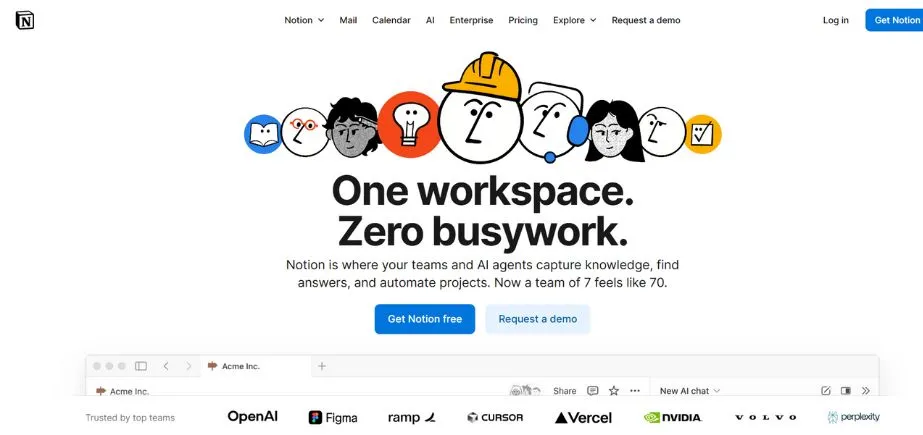
Notion is a multifunctional collaboration and note-taking assistant in one place where tasks, databases, and pedagogy merge. It is easy to make to-do lists, wikis, meeting notes, and project dashboards. It can be used by students keeping to a plan of studies or professionals to keep to a plan of multi-layered work due to the possibility of templates and embedding options. You can plan out your whole life within a single application, connect tasks with notes, and cooperate with other people. Free-form and appearance presentation allow it to be a popular choice that streamlines personal and work-related objectives as well as team processes.
Key Features:
- Block-based editor that combines text, media, and interactive elements
- Powerful database functionality with multiple view types (table, board, calendar, gallery)
- Template library with pre-built solutions for common use cases
- Over 100 integrations with popular tools like Slack, Google Drive, and Zapier
- Real-time collaboration with commenting and sharing permissions
- AI-powered content generation and assistance
Website:
notion.so
Pros:
- Incredible customization options that adapt to any workflow
- Versatile tool that organizes everything from tasks and projects to databases and wikis
Limitations:
- Steep learning curve that can overwhelm new users
- Performance can slow down with very large workspaces
3. Google Keep
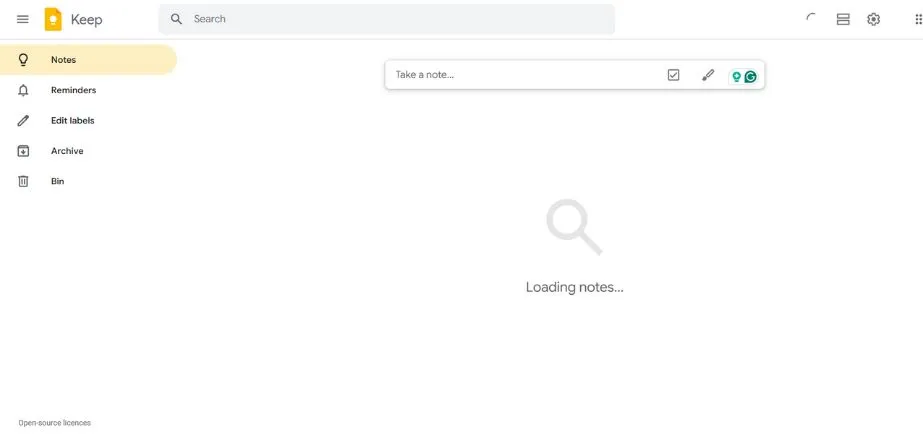
Google Keep is a simple, smart note-taking but one of the best free online tools to write small memos, create a list of tasks, and create reminders. It synchronises between their machines and is compatible with Google Drive and Calendar, and thus fits in day-to-day organisation. You may even use voice memos or pictures and assign color-codes, labeling them in order to have a better sorting system. Google Keep is also great for on-the-go shopping lists, things you want to remember that are quick, or notes you have to take.
Key Features:
- Color-coded notes with text, images, and audio recordings
- Location-based and time-based reminders
- Collaborative notes with real-time sharing
- Optical character recognition (OCR) for extracting text from images
- Seamless integration with Google Workspace
- Cross-platform synchronization with instant access
Website:
keep.google.com
Pros:
- Extremely fast note creation and retrieval
- Excellent mobile experience optimized for quick capture
Limitations:
- Limited formatting and organizational options
- No folder structure or advanced tagging system
4. Grammarly
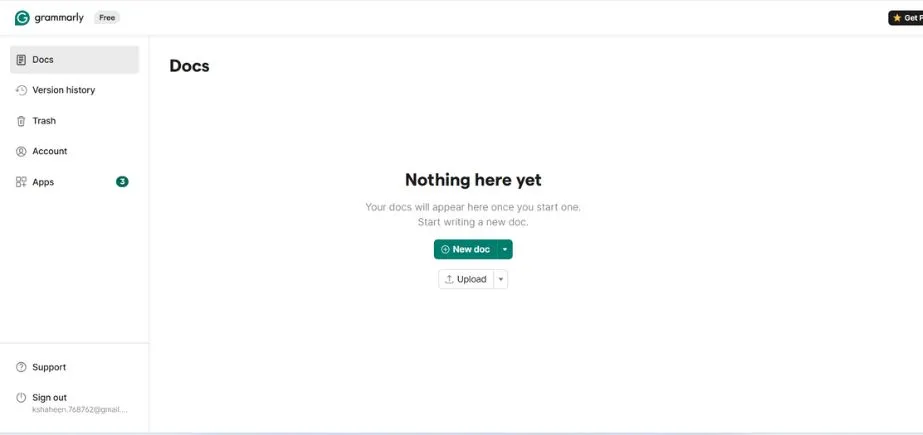
Grammarly is a smart editing tool that allows its users to write clearly and correctly by pinpointing grammar, spelling, punctuation, and tone weaknesses in real-time. Its integrations with the browser and apps you use make it so you could never turn in a less-than-perfect piece of work, be it an email, essay, or report. It also provides recommendations to enhance clarity, interest, and professionalism. Grammarly is an effective application for its prospective users, who are students, professionals, and content creators who desire error-free writing, which increases confidence and the speed of communication without hiring an editor.
Key Features:
- Real-time grammar and spelling correction
- Style and clarity suggestions for improved readability
- Plagiarism detection and citation assistance
- Tone detection to match your intended communication style
- Browser extension that works across all websites
- Mobile keyboard integration for smartphone writing
Website:
grammarly.com
Pros:
- Works seamlessly across all digital platforms and devices
- Provides educational explanations for suggested corrections
Limitations:
- Advanced features like plagiarism detection require premium subscription
- Can sometimes suggest overly formal language for casual contexts
5. Canva
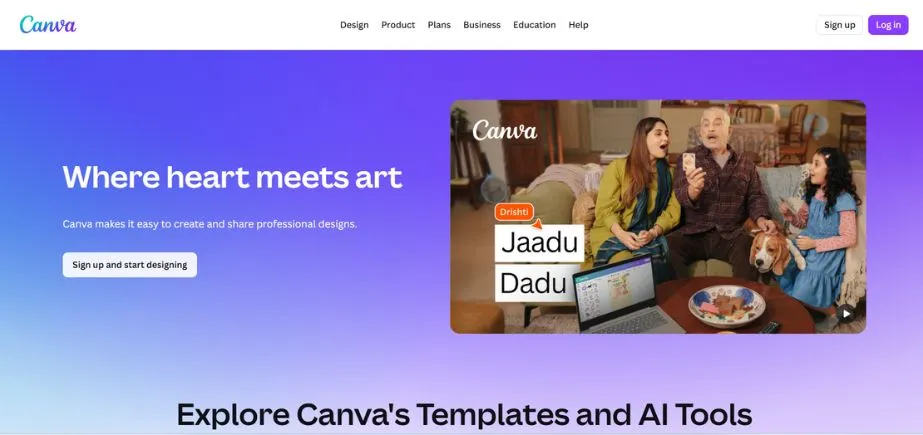
Canva delivers simple design options to make incredible images, including resumes, presentations, planners, and infographics. We have a drag-and-drop interface and thousands of free templates, so anyone can create show-quality content in just a few minutes, even without any graphics design skills. Canva is perfect if you are a student, a freelancer, or a professional who requires quick and effective visuals, permitting collaboration between teams and exporting in different ways. Through the design of social posts and print planners, Canva makes the creative process so beautiful. Canva is one of the most recommended free online tools for any type of designers.
Key Features:
- Thousands of professionally designed templates for every purpose
- Drag-and-drop editor with millions of stock photos and graphics
- Brand kit functionality for consistent visual identity
- Collaboration tools for team design projects
- Magic Resize feature to adapt designs across different formats
- Video editing capabilities and animation tools
Website:
canva.com
Pros:
- No design experience required to create professional-looking content
- Massive template library covering virtually every design need
Limitations:
- Premium templates and stock photos require paid subscription
- Limited advanced editing capabilities compared to professional design software
6. Pomofocus
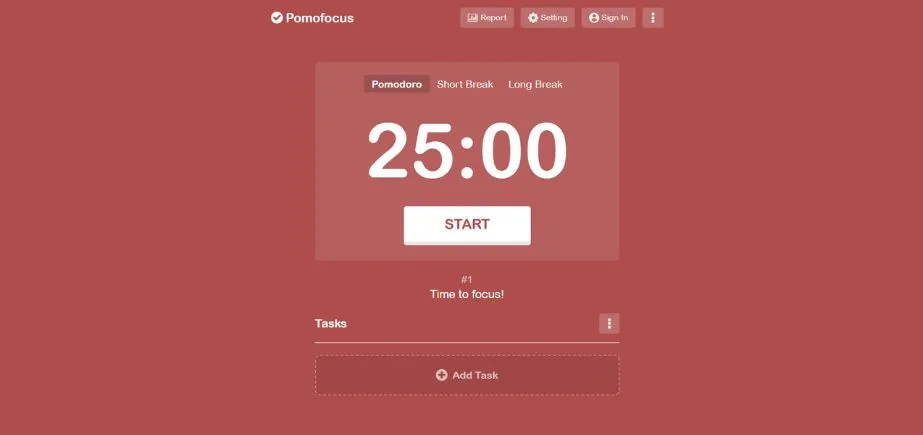
Pomofocus is a productivity timer that follows the guidelines of the Pomodoro Technique, which allows workers to work in focused 25-minute segments followed by small rest periods. This framework will minimize burnout and sustain focus mostly for students and telecommuters. The interface has a simple and minimal appearance, where all users can set their own duration and follow the tasks, and also see the logs of time. It is perfect in eliminating procrastination, improving concentration, and time management, particularly when handling a variety of assignments in a day.
Key Features:
- Customizable work and break intervals with audio notifications
- Task list integration with time tracking for each activity
- Progress statistics and productivity insights
- Customizable themes and background sounds
- Distraction blocking with gentle reminders to stay focused
- Cross-platform availability with synchronization
Website:
pomofocus.io
Pros:
- Based on scientifically proven time management technique
- Simple interface that doesn’t distract from work
Limitations:
- Fixed methodology may not suit all working styles or task types
- Requires discipline to actually take breaks and not override the timer
Explore This as Well: Complete Guide to AI Art Generators
7. Clockify
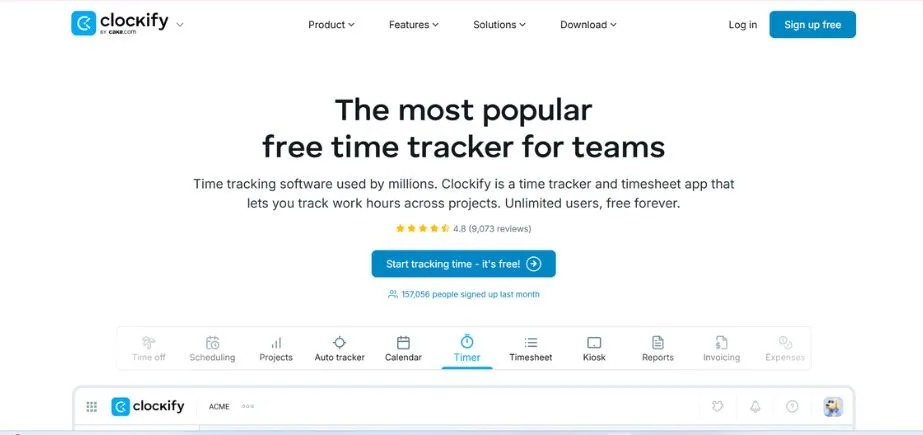
Clockify is one of the best free online tools for free time-tracking designed to enable savvy individuals and teams to gauge time consumption in individual activities and projects. Clockify has timers, manual entry, reports, and breakdowns when you bill clients, manage your studying time, or track the productivity of your team, as a freelancer, a student, or a team leader. It also comes in handy when determining whether you have time-wasting activities and how to plan your day in the most efficient way. Clockify helps you to hold yourself accountable and transparent because it can integrate with such tools as Trello and Google Calendar.
Key Features:
- Manual and automatic time tracking with project categorization
- Detailed reporting and analytics with customizable dashboards
- Team time tracking with approval workflows
- Project budgeting and billing functionality
- Integration with popular project management and productivity tools
- Mobile apps with GPS tracking for location-based time logging
Website:
clockify.me
Pros:
- Generous free plan accommodating unlimited users and projects
- Detailed analytics providing valuable insights into time usage patterns
Limitations:
- Can feel overwhelming for users who want simple time tracking without detailed analytics
- Advanced reporting features require paid subscription
8. Google Calendar
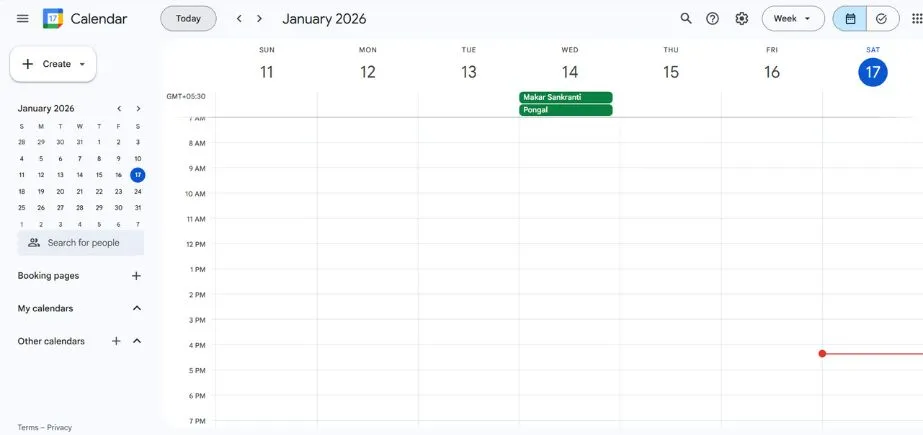
The advantage of Google Calendar is that it makes time management easy because you can use it to plan and keep events, meetings, deadlines, and tasks. It is the perfect color-coded calendars, sharing, and reminders, making it the best for personal and business use. Sync across devices ensures you never miss important commitments. They can allow students to schedule study times, and in professional settings, they should easily enable a team meeting. It also connects perfectly with Gmail and Google Meet, thus making it a formidable center point of managing your life and maintaining the same routines.
Key Features:
- Multiple calendar support with color coding and overlay options
- Smart scheduling suggestions based on availability and preferences
- Real-time collaboration with sharing and permission controls
- Event reminders via email, push notifications, and SMS
- Integration with Gmail for automatic event creation from emails
- Goals and habits tracking with intelligent scheduling
Website:
calendar.google.com
Pros:
- Excellent integration with Google ecosystem and third-party apps
- Smart features like automatic event creation and scheduling suggestions
Limitations:
- Privacy concerns about Google accessing calendar data
- Limited customization options compared to specialized calendar applications
9. ChatGPT
ChatGPT is an AI tool created to aid in the process of brainstorming ideas, writing, and problem-solving, as well as providing answers to questions. In classes, when you have assignments to do, at work when you need to brainstorm, or as a writer to make an article or a professional to create projects, ChatGPT can make things easier when you need to simplify complex subjects, draw ideas, or proofread texts. It provides real-time conversational assistance on almost any topic, which puts it in the utility category as a broadly applicable process facilitator of increased productivity, creativity, and comprehension in educational and business environments.
Key Features:
- Natural language processing for complex question answering
- Writing assistance including drafting, editing, and style improvement
- Research support with synthesis of information from multiple sources
- Creative brainstorming and idea generation
- Code writing and debugging assistance
- Language translation and learning support
Website:
chatgpt.com
Pros:
- Incredibly versatile tool that adapts to countless different use cases
- Available 24/7 for immediate assistance with any question or challenge
Limitations:
- Information accuracy requires verification from authoritative sources
- Advanced features and priority access require paid subscription
10. Todoist
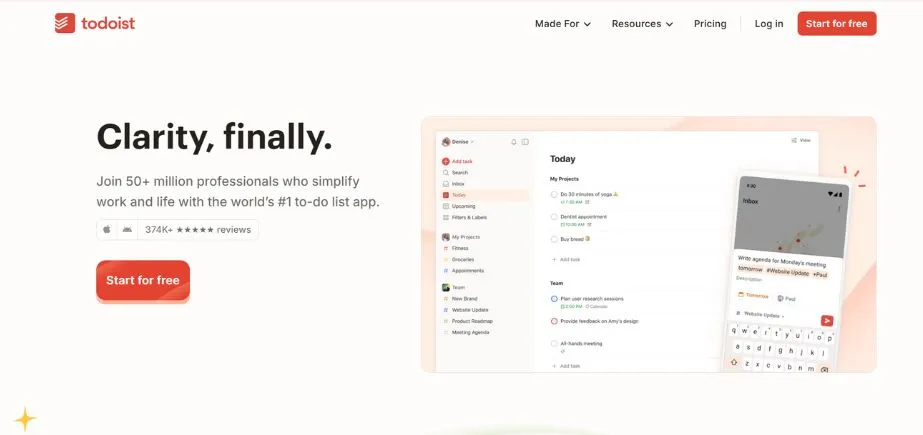
A cross-platform task manager, Todoist is a neat piece of software that allows a user to plan his/her daily to-do lists without much hassle. It has an option of task prioritization, due date, repeats, labels, and grouping of projects. It is perfect whether you want something to manage at work or in your personal life that can help to divide any goal into several sub-goals to make it easier to handle and stay accountable by giving you reminders and tracking your progress. It has a clean design and flexibility, which makes it appropriate to minimal users too, and users who require close planning and organization of tasks.
Key Features:
- Natural language processing for quick task entry with automatic date and priority recognition
- Project hierarchy with sub-tasks and section organization
- Karma system gamifying productivity with points and achievement levels
- Smart scheduling with intelligent suggestions for due dates and times
- Collaboration features for shared projects and task delegation
- Integration with popular calendar and productivity applications
Website:
todoist.com
Pros:
- Clean, intuitive interface that makes task management feel effortless
- Natural language processing makes task entry quick and conversational
Limitations:
- Advanced features like labels, filters, and team inbox require premium subscription
- Limited project management capabilities compared to specialized tools
How to Choose the Right Free Online Tools for Your Needs
To choose the best productivity tools, you have to be honest with yourself and calculate your main problems and the style of work you prefer to complete your goals.
Start by identifying your main priority:
Figure out what your greatest weakness is, be it organization, time management, or something more creative, or studying effectiveness. This will guide you to pay attention to the types of tools that are more suitable for you.
Consider device compatibility:
When you mostly access the content on mobile gadgets, the corresponding software is Google Keep, Todoist, or Pomofocus, designed to work on mobile gadgets. In case you work primarily at a desktop, such tools as Notion or Canva could be more functional and more weighty.
Evaluate collaboration needs:
In case you work as an individual, consider such tools that concentrate on individual productivity. In case you are working in a team, find tools that have good collaboration capabilities, such as Trello, Notion, or Google Calendar, so that the group works and communicates without any issues.
Check for integration with existing tools:
Select tools that are compatible with the other apps you use. Using the example of Google and Microsoft, Google Keep or Google Calendar will be beneficial to people using Google, but users of Microsoft may need to have other tools aligned with Microsoft Outlook and Microsoft OneDrive. Seamless integration helps streamline your workflow.
Conclusion
All of these free online tools can be used to provide efficient methods of reducing the complicated needs of contemporary working, learning, and living. Whether it is the visual project management offered by Trello or AI-assistance provided through ChatGPT, the tools will give you different opportunities to change the way you think about being more productive and manageable. The high level of functionality combined with the price of zero puts these tools into reach of almost anyone determined to make him/herself more efficient and less stressed.
The only ingredient that brings success is careful experimentation and maintenance. Experiment with some tools used in your line of work and needs, and maybe find a feature that fits your needs and challenges specifically, but allow them time before going on to the next app until you find the most effective and efficient one, which fits your needs and challenges the best. Keep in mind that even the most advanced options are of no use without discipline to make it a regular and good practice.
Arguably, the most critical point is to remember that tools of productivity are not solutions per se. They perform best with clear objectives, continuous patterns of behaviour, and a sincere desire to develop. With the correct mix of these and by using them in a consistent manner, you should be able to construct an effective productivity system that will serve your personal circumstances better and enable you to reach a personal and business goal more easily and more gratifyingly.
FAQs about free online tools
1. Are free online tools effective enough to be used in place of paid applications?
Yes, there exist a lot of free tools, and the functionality they provide can compete with or even surpass that of the paid software. Trello, Notion, Canva, and Grammarly are tools with strong task management, note-taking, writing, and design capabilities, which make these tools very useful in both personal and professional situations.
2. Do I have to install something in order to use free online tools?
It does not have to be installed. The majority of the free productivity applications are on the Web, and they can be launched within the browser. Still, most of them have a mobile application so that you can have convenience and access it even when you are on the go.
3. Would I be able to use these free online tools on more than one device?
Well, the majority of available tools, such as Google Calendar, Notion, and Todoist, are synchronized automatically. This gives you the ability to begin something on one device and resume it on another.
4. Are free online tools safe and sound?
Free tools by known providers (such as Google, Notion, or Trello) with a good reputation adhere to well-known security standards. Nevertheless, you should familiarise yourself with privacy policies and refer to platforms that seem suspicious, as well as not disclose sensitive information unless you are sure of the platform that you are using.
5. Are these free online tools offered to work with others?
Well, there are plenty of free software programs that feature collaboration. As an example, Trello and Notion have the possibility of shared boards and pages, Google Calendar editions can be sent out, and Canva has co-editing in real-time, where teamwork becomes easy.
Continue Exploring: Top Brand Monitoring Tools for Online Success