

When you are seeking a loan, be it a home loan or a personal loan or a car loan, the lenders do not simply consider your income, they scrutinize closely how much of such income has been divided to outstanding debts. Here FOIR is found at play. The Fixed Obligation to Income Ratio in full is known as FOIR, and it is one of the most important ratios that banks and other financial institutions analyze to find out whether you are a good person to borrow money or not.
Knowing your FOIR will make the difference between a loan approval and rejection. It assists the lenders to determine your ability to comfortably cover extra debt without financial burden. In the current competitive lending market, understanding how to compute, as well as enhance your Foir full form ratio can greatly increase your opportunities at getting good loan conditions and meeting your financial goals.
What Is FOIR?
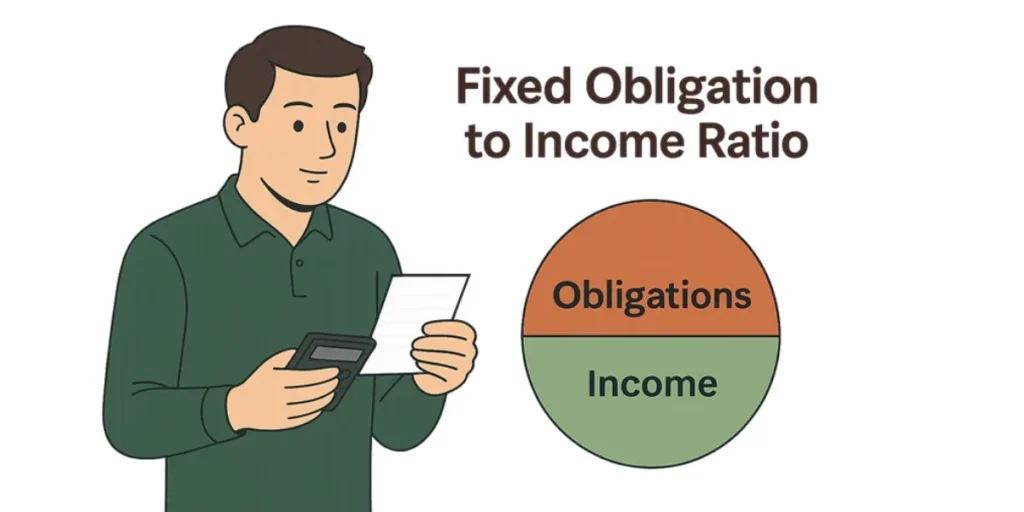
Foir Full Form is Fixed Obligation to Income Ratio which means what percentage of your gross monthly income is spent to cover fixed financial obligations. Such requirements are loan EMIs (Equal Monthly Instalments) due, credit card payments, rent payments, and other recurrent payments.
This ratio is calculated by banks to determine the extra amount of debt burden that you can bear in a responsible manner. The lower the FOIR, the more disposable income you will have after you have done your fixed obligations, which makes you a lower risky borrower. Increased FOIR on the other hand means that you have a high percentage of income that is already tied up and hence there is no room to make more loan payments.
Why FOIR Matters for Loans
- Risk Assessment Tool: FOIR helps the lenders in understanding the level of risk that the borrower may default the loan; when the ratio is high, it indicates that the borrower might experience repayment problems.
- Determination of Loan Amount: FOIR has a direct impact on the amount of loan amount you can obtain.
- Interest Rate Effect: You can probably negotiate successful loans at lower interest rates based on better FOIR ratios.
- Financial Health Indicator: It is an indicator of how you manage money and handle debts.
- Speed of Approval: Applications that have good FOIR ratios are normally expedited.
- Credit Score Correlation: FOIR Healthiness is beneficial in the long run to your credit score.
- Future Borrowing Capacity: A good FOIR would allow an emergency to borrow and do so.
- Debt Consolidation Planning: Allows you to know whether debt consolidation would be useful in your financial life.
FOIR Formula & How to Calculate
Calculation Formula
FOIR is a simple calculation that involves a simple mathematical equation. In order to find your Foir full form ratio, take your total monthly fixed obligations, and divide them by your gross monthly income and multiply by 100 to get the percentage.
The formula is: FOIR = ( Total Fixed Monthly Obligations / Gross Monthly Income) x 100. Fixed monthly payments are all the loans EMIs you have already, minimum payments on your credit cards, and rent payments (where applicable) and all other monthly payments which are provided in a contract. Gross monthly income Before deductions, gross monthly income entails your salary, rental income, business income and other recurrent sources of income.
Step-By-Step Calculation
- Step 1: Add all of your sources of monthly income and determine total gross monthly income.
- Step 2: Summation of all current loan EMIs in the form of home loans, car loans and personal loans.
- Step 3: Add in monthly credit card minimum due payments in the obligations.
- Step 4: Include rent payment in case you are staying in a house on rent.
- Step 5: Add other unchangeable monthly payments such as alimony or maintenance check.
- Step 6: Add up all the fixed obligations determined in step 2-5.
- Step 7: Take total obligations/gross monthly income.
- Step 8: Take a 100 times result to obtain your FOIR percentage.
FOIR Examples (Realistic Scenarios)
Example 1: Young Professional
Rajesh earns ₹75,000 per month and has the following obligations:
- Car loan EMI: ₹12,000
- Credit card minimum payment: ₹3,000
- Personal loan EMI: ₹8,000
Total obligations = ₹23,000 FOIR = (23,000 / 75,000) × 100 = 30.67%
With a FOIR of approximately 31%, Rajesh has a moderate debt burden and good chances for additional loan approval.
Example 2: Family with Multiple Loans
Priya and her spouse have a combined income of ₹1,50,000 monthly with these obligations:
- Home loan EMI: ₹35,000
- Two-wheeler loan EMI: ₹4,000
- Education loan EMI: ₹10,000
- Credit card payments: ₹5,000
Total obligations = ₹54,000 Foir full form ratio = (54,000 / 1,50,000) × 100 = 36%
This FOIR is within acceptable limits but leaves limited room for additional borrowing.
Example 3: Low Debt Individual
Amit earns ₹60,000 monthly with minimal obligations:
- Personal loan EMI: ₹8,000
- Credit card payment: ₹2,000
Total obligations = ₹10,000 FOIR = (10,000 / 60,000) × 100 = 16.67%
With approximately 17% FOIR, Amit has excellent borrowing capacity and would be considered a low-risk borrower.
Example 4: High Debt Scenario
Sneha earns ₹90,000 monthly but has substantial commitments:
- Home loan EMI: ₹30,000
- Car loan EMI: ₹15,000
- Personal loan EMI: ₹12,000
- Credit card payments: ₹6,000
- Rent: ₹8,000
Total obligations = ₹71,000 FOIR full form calculation = (71,000 / 90,000) × 100 = 78.89%
At nearly 79%, this FOIR is extremely high and would likely result in loan application rejection.
What Is a Good FOIR Ratio?
Standard Benchmarks
The various lenders will require different FOIR, although industry guidelines are a general guideline. Salaried individuals have a FOIR of 40-50% or less that most banks and financial institutions want. In the case of self-employed borrowers, the lenders tend to be more conservative with an ideal FOIR of less than 40%. Applicants with excellent credit score and stable income sources are normally accepted by home loan lenders to a limit of 60%.
Lenders of personal loans tend to limit acceptable FOIR to 50%. High-income premium banking clients can have approvals as far as FOIR is 65. The optimum FOIR that will grant you the maximum loan but will make repayment comfortable is between 30-40%. Anything less than 30% is superb and provides you with maximum bargaining strength.
Why These Ranges Matter
- Under 30% FOIR: This is a good financial health range that shows high disposable income. This type of borrower is given the best interest rates, increased loan amount and expedited approval. Their lifestyles have much space in terms of expenses and savings.
- 30-40% FOIR: This is said to be the sweet spot- healthy debt management with fine borrowing ability. These applicants are treated well by the lenders who give them good rates and conditions. It has enough buffer in times of crisis and other financial aspirations.
- 40-50% FOIR: This is an interval that indicates moderate debt burden. Although you can be approved to take a loan, loan conditions might be more strict against you, and the maximum loan limit may be lower. Business is restricted in terms of its financial flexibility.
- 50-60% FOIR: This implies a high level of debt but the ability to pay is low. Only those applicants that had an extraordinary credit score or large assets may obtain loans. The interest rates are increased and the conditions of the loans can be unfavorable.
- More than 60% FOIR: This ratio indicates high debt overload. High-risk defaults deny most lenders in this category. There is the need to cut the debt in the short run and then seek new loans.
Impact of FOIR on Loan Decisions
Loan Eligibility
- Primary Screening Criterion: Foir full form ratio This is usually the primary filter used by lenders, and when it is high, the borrower can automatically be rejected.
- Maximum Loan Amount: Your FOIR is a direct determinant of the limit of how much you may borrow.
- Product Limitations: There are also premium loan products that are only offered to those applicants whose FOIR is less than certain limits.
- Co-applicant Requirement: Co-applicant may be required to add the co-applicant to enhance the application.
- Documentation Requirements: Greater FOIR causes more income evidence and documentation of assets.
- Alternative Assessment: Lenders can apply alternative criteria such as LTV or CIBIL score more to borderline FOIR cases.
Interest Rates & Conditions
- Rate Differentiation: FOIR applicants are also subject to discounts in interest rates of 0.25-0.50%.
- Waiver Fee Processing: Processing fee waivers or reduction can be made through excellent FOIR.
- Flexible Prepayment Terms: Increased Prepayment and foreclosures may be more favorable under better FOIR ratios.
- Collateral Requirements: High FOIR may need extra collateral or guarantors.
- Loan Tenure Capsules: Borderline FOIR may receive reduced maximum tenure preferences.
- Special Conditions: Lenders are free to issue special conditions, such as keeping a minimum balance or insuring.
Application Tips
- Calculate before applying: To avoid rejection by application, know your Foir full form percentage before applying.
- Include All Income: Record all sources of legitimate income, such as bonuses, rental income and investments.
- Close Unused Credit: Before applying, cancel credit cards and open dormant loan accounts.
- Time Your Application: Does it have to be covered up? Despite any outstanding loans or a large amount of credit card debt, finish it before moving on to the next loan.
- Add Co-applicants: When an earning co-applicant is added who has a low FOIR, the eligibility is significantly increased.
- Submit Full Documentation: Have full income documentation, tax filings and bank statements ready.
FOIR vs LTV — Key Differences
What is LTV?
LTV, which is an abbreviation of Loan to Value ratio, is the amount of loan taken as a percentage of the market value of the property. It is mostly applied to secured loans, such as a home loan and a car loan. LTV is computed by taking the loan divided by the current market value of the asset and multiplying it by 100.
An example is when you purchase a house with a value of ₹50 lakhs, and the bank lends you ₹40 lakhs, then you are 80% in terms of LTV. A low LTV will mean a larger down payment and less risk to the lenders. The maximum LTV is usually limited to 75-90% according to the value of a property andthe loan amount.
FOIR vs LTV
| Parameter | FOIR | LTV |
| Full Form | Fixed Obligation to Income Ratio | Loan to Value Ratio |
| Measures | Debt servicing capacity based on income | Loan amount relative to asset value |
| Applicability | All types of loans | Primarily secured loans |
| Calculation Basis | Income and existing obligations | Asset value and loan amount |
| Ideal Range | 30-40% for best terms | 60-75% for favorable conditions |
| Impact | Determines repayment ability | Determines loan quantum and risk |
| Risk Indicator | Cash flow and repayment risk | Collateral coverage risk |
| Flexibility | Can improve by increasing income or reducing debt | Requires higher down payment to improve |
Tips to Improve Your FOIR
- Increase Your Income: Do more work, freelance or pursue promotions to increase monthly earnings.
- Close Expensive Loans: First settle high-interest loans such as personal loans and credit card debt.
- Consolidate Debts: Turn numerous high-EMIs into one lower-EMI consolidation loan.
- Prolong Loan Tenures: Extend the tenure of the existing loans to come off the loans in terms of monthly EMI temporarily.
- Clear Credit Cards: Pay off all outstanding credit card debts or keep zero balances on credit cards to have an improved FOIR.
- Eliminate Guarantorship: You should ask them to remove your name from loans in which you are a guarantor.
- Wait Before You Apply: Wait until your current loans become payable or have gone down to a low value.
- Add Income Sources: if the income is rental income, investment returns or spousal income, add it in the calculations.
- Minimize Fixed obligations: Renegotiate lease, cancel unwanted subscriptions and do away with fixed costs that are not necessary.
- Balance Transfer: Transfer loans to lenders with better EMIs on balance transfer schemes.
- New Credit: Do not take New loans or credit cards without applying for major loans.
- Fix better credit score: Better credit scores can at times be flexible with FOIR requirements.
Conclusion
Knowing the Foir full form and its implications is a must when one wants to take a loan or already has several loans to manage. We have your Fixed Obligation to Income Ratio; it is the financial health report card that lending institutions study keenly before granting credit. It is important to keep your FOIR between 30-40% to not only increase your chances of getting a loan but also not to be over-indebted and have some income to save, invest, and live the way you wish.
Using proactive management of your FOIR by improving your income, repaying strategic debt, and engaging in proper financial planning, you will be well placed as a preferred borrower and will attract the best rates on interest and loan conditions. Keep in mind that FOIR does not represent a constant figure, it changes with your financial choice. The habitual observation and deliberate attempts to maintain your FOIR within an optimal level will be beneficial to your future financial health and the open access to better credit facilities whenever you desire it.
FAQs
What is the Foir full form and its significance?
FOIR is an acronym that is used in Fixed Obligation to Income Ratio. It is important as it enables lenders to determine your ability to repay debt when they give loans to you. Good FOIR means that you are comfortable adding more debt.
What will be a good FOIR percentage?
An ideal FOIR is around 30-40 percent which is desirable to the majority of borrowers. Anything less than 30% is good but 40-50% is tolerable and could restrict loan facilities. A higher percentage of over 60% usually creates loan rejections.
Is rent payment part of FOIR?
Yes, when you are paying rent, this should be a part and parcel in your regular monthly fixed costs that must be computed in FOIR. Other lenders will however not include rent in case of home loans whereby you will be leaving the rented house.
Will I be able to develop my FOIR in a short period of time and take out a loan?
Yes, it is possible to work on FOIR, paying off credit card debts, small loans, adding the income of a co-applicant, or proving other sources of income. Nevertheless, sustainable growth needs long-term policies on debt reduction.
Are loan approvals by lenders based on FOIR only?
No, though FOIR is important, credit score, work stability, age, length of loan, property value (secured loans), existing relationship with the bank, and financial profile are also considered by lenders prior to their lending decisions.