Let’s think about our normal banking experience for a second. Mostly, it’s formal, time-consuming, and maybe even a little impersonal. But there’s another side of banking in India that’s more personal, more accessible, and more community-based: cooperative banks. Cooperative banks in India have moved from being small-town banking institutions that quietly go about their business. They have moved into the spotlight with their unique blend of trust and technology. The total business of top urban cooperative banks is now more than ₹2 lakh crore.
For India’s backbones, MSMEs and agriculture, cooperative banks have been stepping in where other banks have been hesitant. That’s what makes them unique. They have been helping small business owners grow their businesses into bigger opportunities. And here’s the best part, cooperative banks in India have been gaining momentum with stronger regulations. The Reserve Bank of India is tightening regulations on cooperative banks, which makes them more secure, reliable, and future-ready.
So, if you are looking for a banking partner that offers trust, accessibility, and modern convenience all at once, then you are in the right place. So, let’s take a look at the top cooperative banks in India and find the one that suits your needs perfectly!
What is a Cooperative Bank?
A cooperative bank is a financial institution that is owned by its members, who are at the same time the customers. The banks operate under the motto of ‘no loss, no profit’ and are more focused on serving the community rather than making money quickly. The banks are registered under the Cooperative Societies Act and are governed by the Reserve Bank of India to ensure that your money is safe. In addition, they play a huge role in providing loans to farmers, small traders, and people in semi-urban areas who might find big banks a bit too formal.
Types of Cooperative Banks
The following are the different ways that these banks are structured across the country:
State Cooperative Banks
These banks act as the apex bodies in the respective states. The banks serve as a bridge between the Reserve Bank of India and the smaller cooperative banks in India .
Central Cooperative Banks
Operating at the district level, these banks function as a middle tier. They mainly support primary credit societies and ensure that local farmers and small businesses in specific districts get the funding they need on time.
Primary Cooperative Banks
They are called Urban Cooperative Banks (UCBs) and can be found in cities and towns. They serve small-scale industries, professionals, and those who earn salaries, offering services that look almost as if they are from your typical commercial bank.
Land Development Banks
As the name suggests, these focus on long-term loans for land-related projects. This includes buying heavy machinery like tractors or clearing old debts, helping farmers invest in the future of their property.
Primary Agricultural Credit Societies (PACS)
These are the most basic units, usually working at the village level. They provide short-term crop loans and are the first point of contact for millions of rural Indians looking for financial support.
List of Top 10 Cooperative Banks in India 2026
| Bank Name | Headquarters | Type | Key Services |
| Saraswat Bank | Mumbai | Multi-State UCB | Retail & Corporate Banking, Forex |
| Cosmos Bank | Pune | Multi-State UCB | Digital Banking, Currency Chest |
| SVC Bank | Mumbai | Scheduled UCB | Personal Loans, Gold Loans, UPI |
| Abhyudaya Bank | Mumbai | Scheduled UCB | MSME Loans, Mobile Banking |
| Bharat Bank | Mumbai | Scheduled UCB | Insurance, RuPay Cards, NRI Services |
| TJSB Bank | Thane | Multi-State UCB | GST Services, Mutual Funds, Loans |
| NKGSB Bank | Mumbai | Multi-State UCB | Women Entrepreneur Loans, Solar Loans |
| Janata Sahakari Bank | Pune | Scheduled UCB | Core Banking, SME Finance, Forex |
| Kalupur Bank | Ahmedabad | Scheduled UCB | WhatsApp Banking, E-Tax, Remittances |
| Punjab State Bank | Chandigarh | State Co-op Bank | Agri-Loans, Social Security Schemes |
Top 10 Cooperative Banks in India 2026
1. Saraswat Co-operative Bank Ltd.

- Founded In: 1918
- Headquarters: Mumbai, Maharashtra
- Depositors: Over 36 Lakh
- Employees & Branches: 5,400+ Employees and 311 Branches
As the undisputed leader among cooperative banks in India , Saraswat Bank is a financial behemoth that has achieved a phenomenal milestone in its business of ₹91,814 crore as of March 2025. Recently, the bank has expanded its business by merging with New India Co-operative Bank. This has not only increased the number of branches but has also protected the interests of its new customers.
In addition, this bank is using high-tech facilities to provide its customers with a seamless experience, with its 2.8 lakh members being its priority. It is one of the few cooperative banks that give more emphasis to international banking and forex.
- Services Offered: Savings & Current Accounts, Home Loans, Education Loans, Forex, Netbanking, Mobile App, Demat Services.
- Website: https://www.saraswatbank.com
2. Cosmos Co-operative Bank Ltd.
- Founded In: 1906
- Headquarters: Pune, Maharashtra
- Depositors: ~20 Lakh
- Employees & Branches: 3,130 Employees and 183 Branches
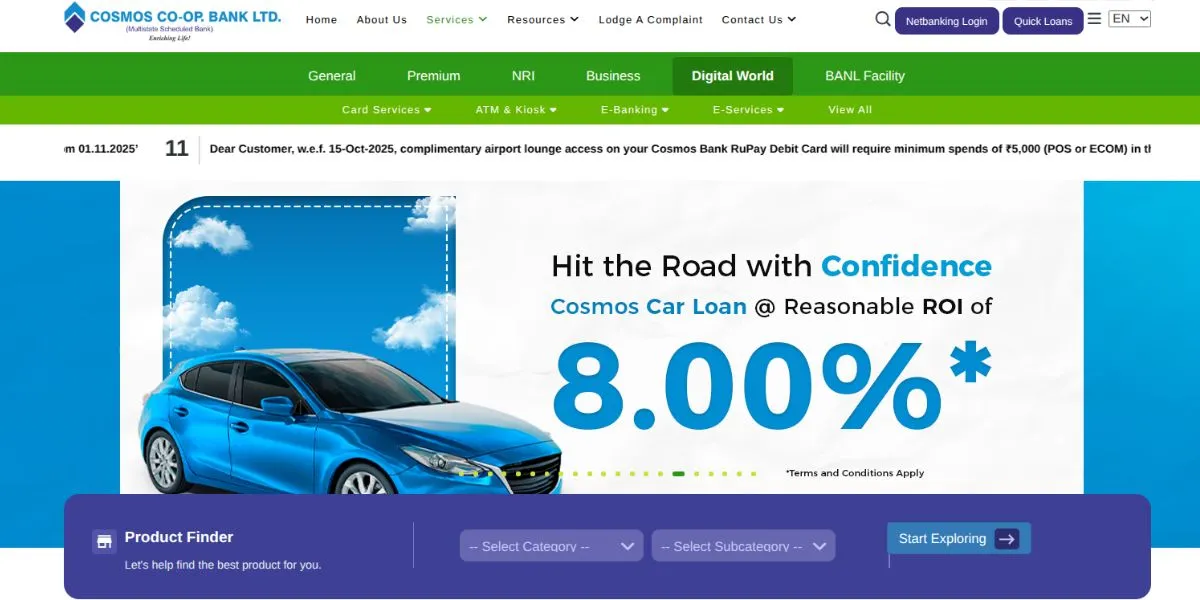
Cosmos Bank is an old and highly respected name in this industry. Currently, it is managing its business mix of over ₹38,600 crore with advances of almost ₹15,727 crore. It is famous for being a “tech-first” bank, which means it is often the first in the cooperative banking space to launch something new and innovative. This helps its customers manage their money from anywhere. Its customer base is highly diverse, ranging from retail customers to large corporate clients.
Moreover, its presence in seven states makes it a truly national player in the cooperative banking space.
- Services Offered: Personal Banking, Corporate Loans, Currency Chest, Internet Banking, RuPay Debit Cards, WhatsApp Banking.
- Website: https://www.cosmosbank.com
3. SVC Co-operative Bank Ltd. (Shamrao Vithal)
- Founded In: 1906
- Headquarters: Mumbai, Maharashtra
- Depositors: ~15 Lakh
- Employees & Branches: ~2,500 Employees and 198 Branches
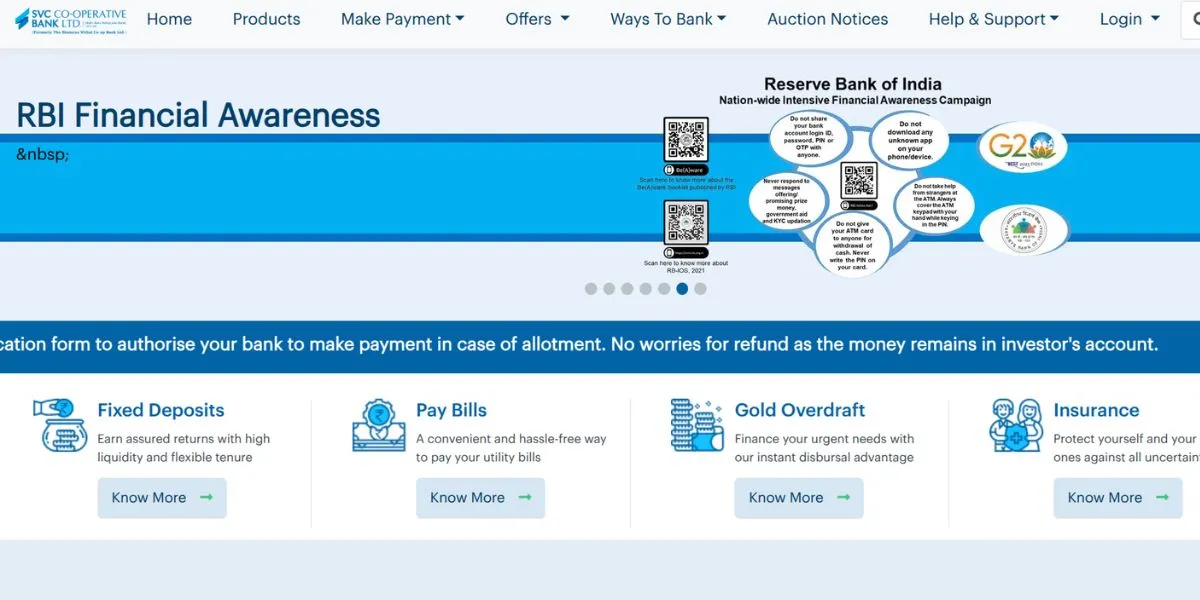
SVC Bank is highly recognized for its outstanding customer service and its forward-thinking approach. Currently, it is managing its total business of approximately ₹39,353 crore with a stable base of ₹22,380 crore in deposits. Its presence in 11 states is highly impressive. It has shifted its focus to digital banking to ensure its customers can access their accounts 24/7 through mobile banking and UPI.
In addition, it offers specialized banking products for its retail customers and corporate clients. This means every type of customer can find a financial product of their choice.
- Services Offered: Retail Banking, Gold Loans, Corporate Finance, UPI, Mobile Banking, Fixed Deposits, NRI Accounts.
- Website: https://www.svcbank.com
4. Abhyudaya Co-operative Bank Ltd.

- Founded In: 1965
- Headquarters: Mumbai, Maharashtra
- Depositors: 15.14 Lakh Accounts
- Employees & Branches: ~1,800 Employees and 107 Branches
Starting off as a small entity, the bank has now become a force to reckon with, with its business turnover exceeding ₹14,193 crores. Its specialty is its focus on the “common man.” It has been conferred with many awards for its mobile banking facilities, which enable its more than 5 lakh registered digital users to access the facilities they need directly through their smartphones. With its presence felt in Maharashtra, Gujarat, and Karnataka, the bank still manages to keep its focus tight on MSME lending to enable the growth and success of small businesses in the region.
- Services Offered: Savings Accounts, MSME Loans, Vehicle Loans, Mobile Banking, RTGS/NEFT, Term Deposits.
- Website: https://www.abhyudayabank.co.in
5. TJSB Sahakari Bank Ltd.

- Founded In: 1972
- Headquarters: Thane, Maharashtra
- Depositors: ~12 Lakh
- Employees & Branches: ~1,600 Employees and 149 Branches
TJSB is known as synonymous with trust throughout the Thane and Mumbai region, since it manages its entire business portfolio of ₹23,105 crores as of March 2025 itself. Also the bank has a very clean balance sheet and has spread out to five different states, including Goa and Gujarat. The Union Territories of Daman and Diu also experience its modern-day financial solutions. Moreover, it places a huge emphasis on the empowerment of women through special loan offers at low interest rates. The bank also offers ‘any branch banking’ through core banking technology.
- Services Offered: Retail Loans, Women Entrepreneur Loans, GST Payments, Mutual Funds, UPI Transactions, and Safety Lockers.
- Website: https://www.tjsb.bank.in/
6. Bharat Co-operative Bank Ltd.
- Founded In: 1978
- Headquarters: Mumbai, Maharashtra
- Depositors: ~10 Lakh
- Employees & Branches: 1,438 Employees and 101 Branches
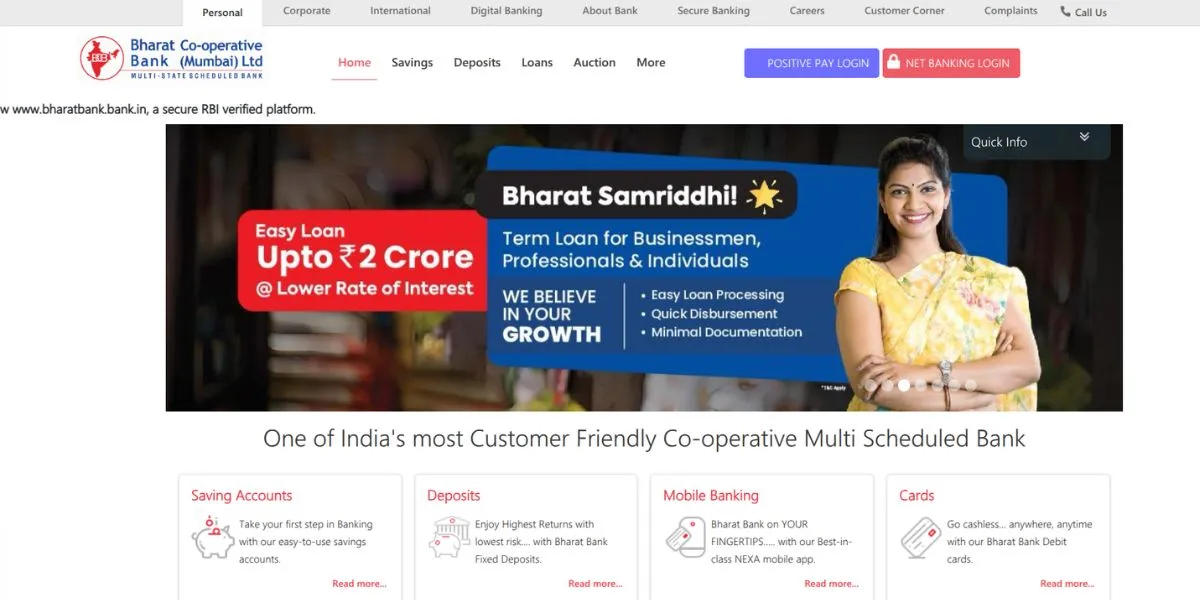
Bharat Bank is a leading bank in the retail and corporate sectors in Maharashtra and Karnataka, with deposits of about ₹10,995 crore. It maintains a high level of transparency in all its operations. It offers a very friendly environment to its customers. It is continuously increasing the number of ATMs, which means that people can access their cash whenever they want. In addition, it offers a complete financial solution to customers, and the reward points offered by the RuPay card have become a huge success for the young generation.
- Services Offered: Current Accounts, Home & Vehicle Loans, RuPay Debit Cards, Life Insurance, NRI Banking, Secure Lockers.
- Website: https://www.bharatbank.com
7. NKGSB Co-operative Bank Ltd.

- Founded In: 1917
- Headquarters: Mumbai, Maharashtra
- Depositors: ~9 Lakh
- Employees & Branches: 898 Employees and 105 Branches
NKGSB Bank is a century-old bank that handles a total business mix of ₹13,899 crores. The bank is particularly famous for its unique loan offers, including the financing of solar panels and electric vehicles. Its presence is evident in the states of Maharashtra, Karnataka and Goa. The Union Territories of Daman and Diu too benefit from their modern-day financial solutions. Moreover, it places a huge emphasis on the empowerment of women through special loan offers at low interest rates. The bank also offers ‘any branch banking’ through core banking technology.
- Services Offered: EV Loans, Solar Panel Loans, Stree Sakthi Loans, NRI Banking, Forex, Mobile Banking, Demat.
- Website: https://www.nkgsb-bank.com
8. Janata Sahakari Bank Ltd.

- Founded In: 1949
- Headquarters: Pune, Maharashtra
- Depositors: ~8 Lakh
- Employees & Branches: ~1,200 Employees and 71 Branches
Janata Sahakari Bank has always been a pillar for the economically weaker sections of society, especially in Pune and the surrounding regions. The bank has managed a total business of over ₹16,231 crore, focusing highly on the welfare of society. The bank is very active in SME banking, where small workshops and traders are able to get the credit they need without having to worry about too much paperwork. The bank has also adopted the latest technologies, such as IMPS and NEFT, for quick money transfers. Additionally, it also offers a stable environment for long-term depositors, making it one of the best cooperative banks in India .
- Services Offered: Recurring Deposits, Cash Credit, Consumer Durable Loans, Education Loans, Forex, and Mobile App.
- Website: https://jsblpune.bank.in
9. Kalupur Commercial Co-operative Bank Ltd.
- Founded In: 1970
- Headquarters: Ahmedabad, Gujarat
- Depositors: ~7 Lakh
- Employees & Branches: ~1,000 Employees and 64 Branches
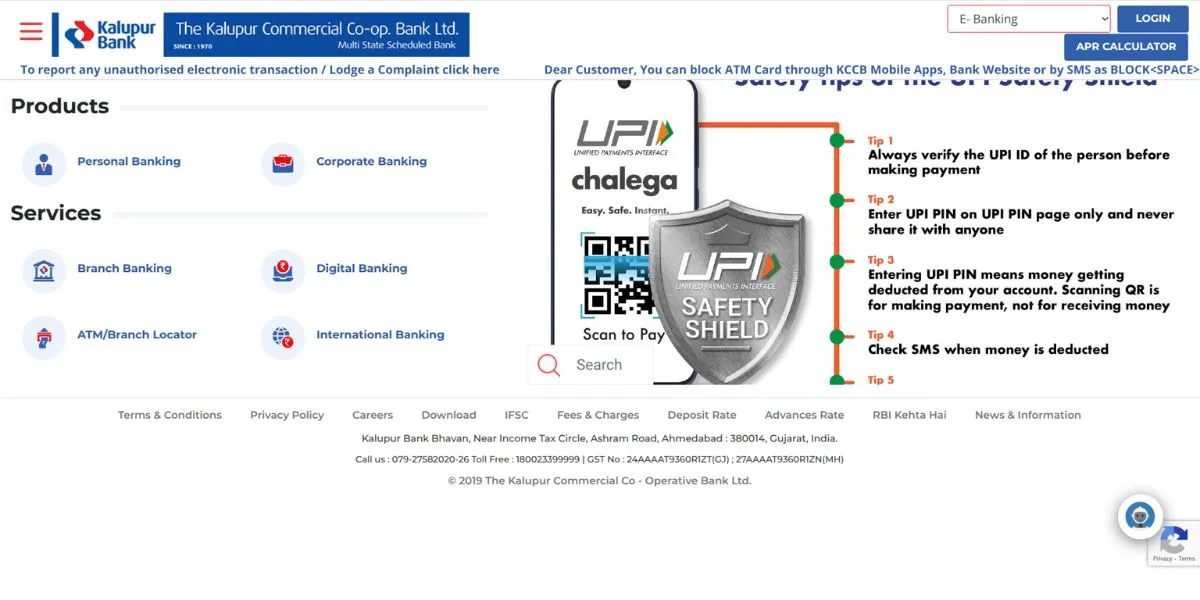
Kalupur Bank was initiated with the sole aim of helping the grain merchants of Ahmedabad, but has now become the leading cooperative bank in Gujarat, with deposits of ₹12,297 crore and adhering to the principles of ethical banking. This bank is tech-savvy, with the provision of WhatsApp banking and missed calls to check the account balances, keeping the customers updated about their account balances at all times. The bank also serves the rural and urban populations alike with the provision of quick finance to business owners. Additionally, the finance bank is very efficient in handling foreign remittances and NRE accounts.
- Services Offered: Business Loans, WhatsApp Banking, E-Tax Payments, Stamp Franking, Import-Export Finance, and PAN Services.
- Website: https://kalupur.bank.in
10. Punjab State Co-operative Bank
- Founded In: 1949
- Headquarters: Chandigarh, Punjab
- Depositors: ~6 Lakh (Direct) + District Networks
- Employees & Branches: Over 800 Branches (including district banks)
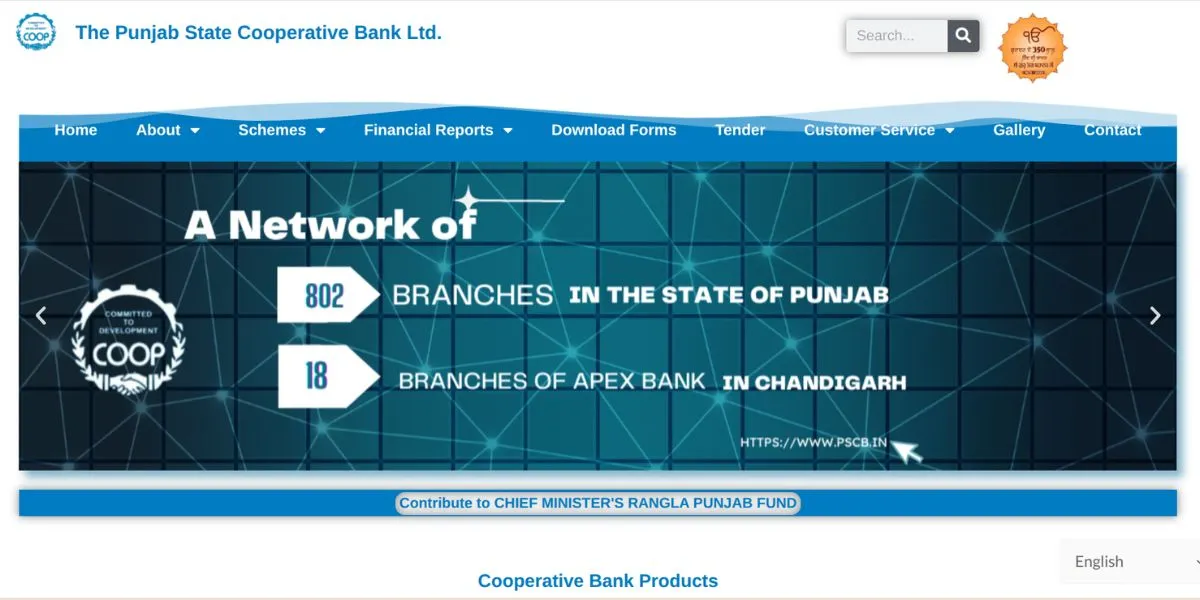
This is the backbone of the agricultural sector of the state of Punjab, with the power to manage 20 District Central Cooperative Banks to ensure that every farmer gets access to credit. It is the go-to place for people looking for crop loans or animal husbandry finance, and the bank also implements various government-backed social security schemes to protect the rural population. Besides, the bank also offers regular retail loans such as home loans and education loans to ensure that the urban crowd is taken care of, too.
- Services Offered: Crop Loans, Agri-Business Finance, Sehkari Bank Bima, Home Loans, E-Stamping, RTGS/NEFT.
- Website: https://www.pscb.in
How Many Cooperative Banks Are in India
The number of Cooperative Banks in India , as of 2026, is huge, as all areas of India are covered by the branches of these banks. These banks can be further divided into two major categories, namely Urban Cooperative Societies and Rural Cooperative Societies.
- Urban Units: There are approximately 1,450 to 1,500 Urban Cooperative Societies functioning in the country.
- Rural Network: There are over 96,000 rural Cooperative Bank Units, including State/Central Cooperative Banks.
- Member Base: These banks have a total of over 200 million members.
- Geographic Focus: Maharashtra is the hub of successful Cooperative Banks in India , followed by Gujarat and Karnataka.
- Regulation: All of them are now under the strict eye of the RBI, making the industry much more professional.
Benefits of Cooperative Banks
Choosing any of the Cooperative Banks in India comes with a number of advantages that you may not get from any of the other banks in the country. These include:
- Higher Interest: These banks offer slightly higher interest on your savings as well as fixed deposits, which can be used to increase your savings.
- Easier Loans: The loan schemes provided by them are much easier, which can be a huge advantage for those who run their own businesses.
- Community First: The profits are reinvested in the community or distributed as dividends to the members rather than to distant shareholders.
- Local Reach: They are present in rural areas where the larger banks may not be willing to go, ensuring that everyone gets access to their financial resources.
- Democratic Setup: Each member gets a say in how the bank is run, giving you the real feeling of owning the bank.
Conclusion
The cooperative bank sector is booming in India, and the experience is more thrilling than ever before in 2026. From the conventional offices where everything was done manually, these banks have shifted to high-speed offices where everything is done through the latest technology. While they are community-based, they are also globally technologically integrated, providing their customers with a unique experience.
Whether you are a student who wants to get an education loan or are a business owner who wants quick credit facilities, they are the best option. Besides, with the RBI regulations becoming more stringent and the banks getting larger through mergers, you are assured that your money is in good hands. Therefore, the next time you think about opening an account, consider the option of cooperative banks in India .
Visi for more information:
FAQs
1. Are cooperative banks in India safe for my savings?
Yes, they are. They are regulated by the RBI and have DICGC insurance, which guarantees your deposits up to Rs. 5 Lakh.
2. Can I get a home loan from a cooperative bank?
Of course! Most of the top cooperative banks offer home loans with flexible repayment schemes at low interest rates with minimal paperwork.
3. Do these apps also offer mobile apps?
Most of the top cooperative banks, like Saraswat, Cosmos, SVC, etc., have fantastic mobile apps that allow you to do all your transactions with ease.
4. How is a cooperative bank different from a private bank?
Cooperative banks are member-owned banks that focus on service to society, whereas private banks are shareholder-owned banks that focus on generating profit.
5. Can any citizen open an account in a cooperative bank?
Yes, any citizen is eligible to open an account with a cooperative bank. Moreover, you also become a member of that bank by buying shares in small amounts.