

The key of establishing a successful export business in India is to get trusted international buyers for export. Understanding how to find buyers for export is critical as global trade transforms at a high pace and the digital space continues to change the way businesses communicate. Indian exporters are currently getting more access to foreign markets than ever before. Nonetheless, to move in this landscape, one needs to be strategic, well-documented, and knowledgeable about the appropriate platforms and channels.
Whether you are a veteran at export business or you are new to the business of international trade, knowing where and how to locate real buyers for export will make a significant difference to your business. This guide is a holistic approach to the established strategies, government assistance, technology platforms, and industry platforms that can help Indian exporters connect with confirmed international customers in various industry segments and geographies.
Why Finding the Right Export Buyers is Critical
- Secures Business Sustainability and Growth: Dependable buyers for export establish predictable business revenues and long-term business associations.
- Reduces Risk on Payments and Fraud: Authenticated customers minimise risks of non-payment, fraud, and loss of funds.
- Establishes Good International Faces: A Good buyer relationship makes you very credible in the international markets.
- Maximises profitability and price: The Right buyers know the value of products and pay reasonable and competitive prices.
- Allows Market Expansion Opportunities: The strategic buyer networks create an access point to new geographies and customers.
How to Find Buyers for Export from India: 10 Best Ways for 2026
1. Use the Indian Trade Portal
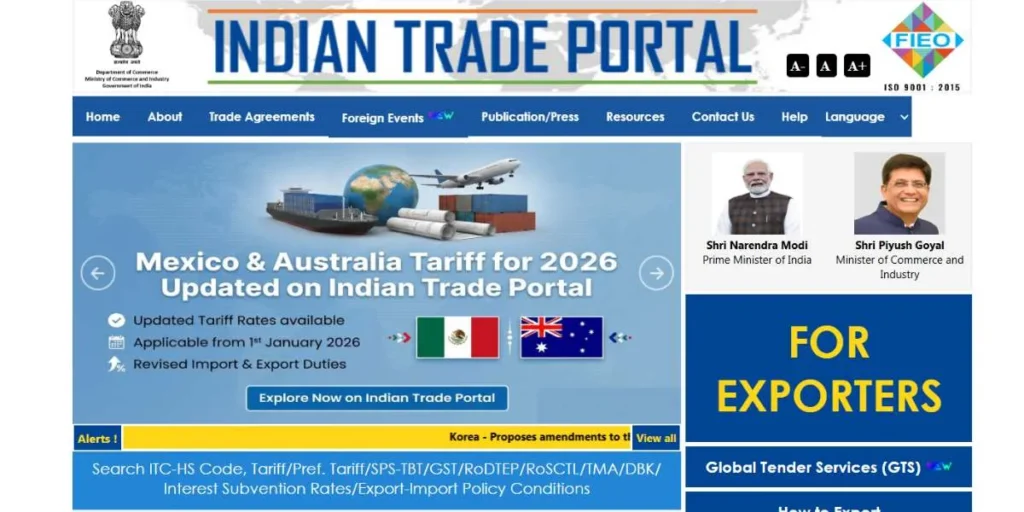
Indian Trade Portal is an Indian government-sponsored online trading platform that will help the Indian exporters get global customers and understand How to Find Buyers for Export. It offers trade information, buyer leads, market intelligence and regulatory information, which are managed by the Ministry of Commerce and Industry.
The portal provides access to free information on exports, trade agreements, tariff and verified buyer databases. It is a single point of contact of exporters who want to place genuine international business opportunities but in a manner that does not violate any Indian trade regulations and international standards.
Why It Works:
- Buyer authenticity is guaranteed through the verification of the database by the government.
- Giving in-depth trade statistics and market intelligence.
- With free access, first door barriers to investment are removed.
How to Use It:
- Registered business credentials and documents.
- Buyers of search by product category and location.
- Consider trade data to conduct a competitive analysis on a regular basis.
Pro Tip:
- Frequently keep your product catalogue updated to be visible.
- Quickly reply to consumer requests and communications.
- Cross-reference is the leading platform among other verification platforms.
2. Contact Export Promotion Councils (EPCs)
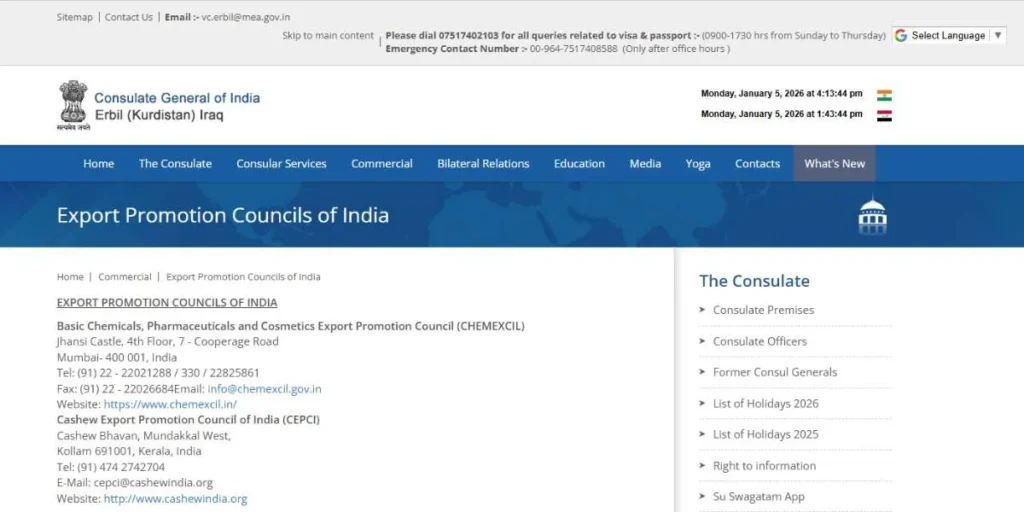
Export Promotion Councils refer to the top industry specific bodies that have been set up by the Indian government to encourage and assist exporters in the different industries. Specialised help is availed by organisations such as the Engineering Export Promotion Council, Apparel Export Promotion Council, and Spices Board India, which focus on the assistance of certain industries.
The EPCs coordinate trade missions worldwide, arrange buyer-seller meetings, conduct market research, and provide export incentives. They have large databases of foreign purchasers, give them strategies on how to enter the market, and assist them in resolving trade conflicts and promoting friendly trade policies.
Why It Works:
- Expert knowledge. In this industry, it fits exactly with your product type.
- The developed international networks offer pre-approved customer contacts.
- Business introductions are credible because of government support.
How to Use It:
- Find applicable EPC in your products industry.
- Join as a member in order to have access to exclusive resources.
- Attend buyer-seller meets arranged by councils actively.
Pro Tip:
- Watch EPC webinars to get the market trends.
- Ask to receive customized lists of buyers to target countries.
- Use EPC certification to increase product credibility.
3. Check DGFT & IEC-Registered Exporters
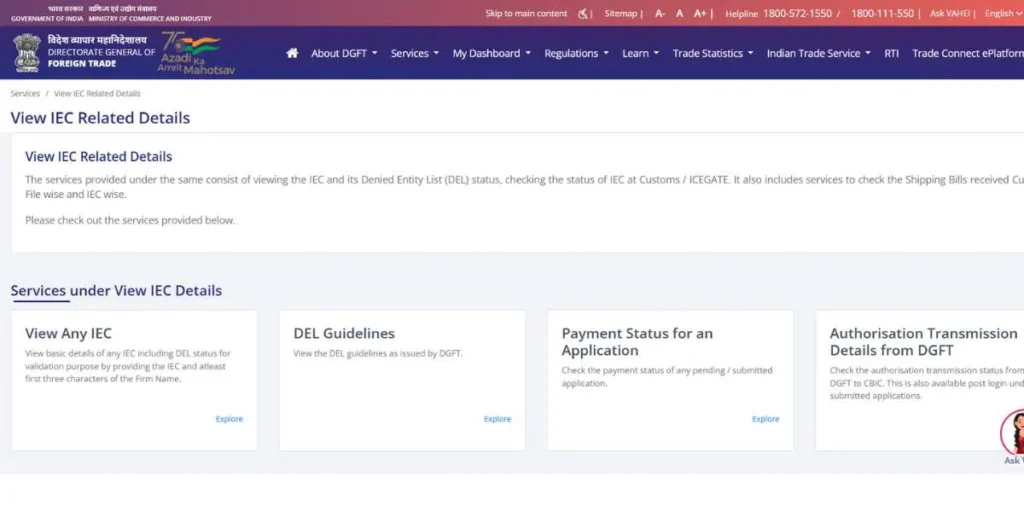
Directorate General of Foreign Trade (DGFT) has extensive databases of registered exporters with Import Export Code (IEC) licenses in India. This government service will enable you to understand How to Find Buyers for Export and find potential business associates, competition, and business trends by researching on the active exporters in your segment. The DGFT portal will give you detailed export statistics, shipping records, and details about the buyer that will enable you to get a feel of market dynamics. Through the research of the successful exporters and where they are heading to, you will be able to spot potential markets and even get to know the indirect buyer contacts using the trade documentation.
Why It Works:
- Genuine government documents guarantee reliability of the data fully.
- Discloses the successful export markets and trends.
- Helps find the possibilities to cooperate with the exporters.
How to Use It:
- Log-in Access DGFT portal and access business credentials.
- Consider competitors exportation trends and markets.
- Find undervalued global markets with knowledge.
Pro Tip:
- Monitor the product mix strategy of the top exporters.
- Check with complementary suppliers to do joint ventures.
- Keep a watch on DGFT circulars of new export opportunities.
4. Leverage B2B Websites
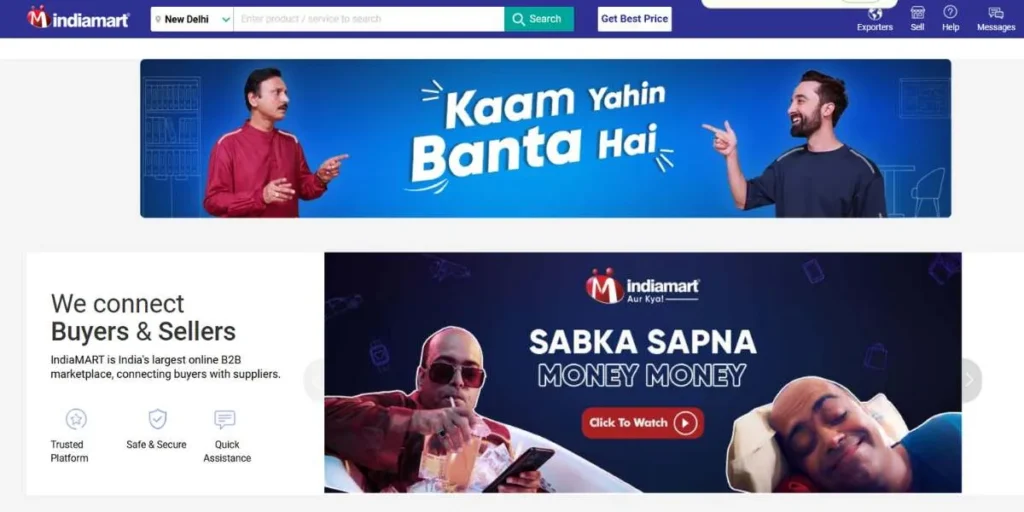
Business-to-business exchanges such as IndiaMART, TradeIndia, Alibaba, Global Sources and Made-in-India.com act as virtual exhibition halls between the suppliers and international purchasers. These sites have millions of product offerings in categories, which expose an exporter to international procurement managers who are in the process of finding suppliers.
The majority of B2B websites offer such functions as inquiry management, product displays, certified badges of suppliers, and analysis boards. Premium memberships would have a higher level of visibility, a higher ranking, direct contact information with buyers for export, and would be effective in creating qualified export leads on a regular basis.
Why It Works:
- There is a constant presence due to the enormous amount of buyer traffic around the world.
- Advanced filters assist buyers in finding the relevant suppliers.
- Inquiry management systems make the communication processes lean.
How to Use It:
- Prepare product specifications and details.
- Post the images and demonstration videos of high-quality products.
- Ask questions and respond to them in hours to maximise conversions.
Pro Tip:
- Invest in supplier badges that have been verified in order to place trust.
- Optimise search using keywords.
- Periodically update stock and price data on a timely basis.
5. Use LinkedIn for Export Leads

LinkedIn has become an effective B2B network tool in which procurement managers, import buyers and business decision-makers seek suppliers actively and explore How to Find Buyers for Export. LinkedIn has more than 900 million professionals across the world and allows them to reach out to a select group of people according to industry, job title, company size, and location. The exporters have an opportunity to demonstrate skill levels by using content marketing, being members of industry-related communities, engaging in discussions, and making direct contact with potential customers. LinkedIn Sales Navigator provides plenty of search filters and lead suggestions, which is why it is an inalienable tool of every modern exporter who wants to generate professional relationships in an organic manner.
Why It Works:
- The direct approach to decision-makers eliminates intermediaries.
- Credibility and trust are naturally created in the professional context.
- Sharing of content depicts product knowledge and expertise.
How to Use It:
- Maximize profile highlighting, exportation, and certifications.
- Partner with foreign purchasers in target markets.
- Post useful industry information regularly to be seen.
Pro Tip:
- Personalize the connection requests by saying that there are certain mutual interests.
- Advanced search should be used to conduct outreach to procurement managers.
- Interview the posts of potential buyers and then pitch.
6. Attend Trade Fairs & Exhibitions
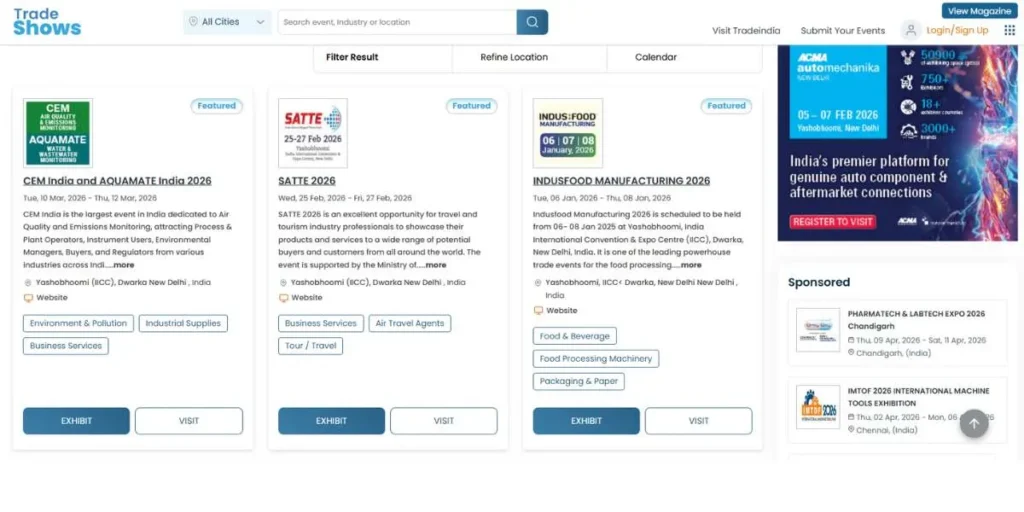
The international trade fairs and exhibitions are still one of the best methods of accessing a face-to-face buyer and building relationships. Exhibitions such as the India International Trade Fair, Gulfood Dubai, the Canton Fair China, and industry-specific exhibitions have thousands of real buyers for export who are on the hunt to get new suppliers.
These media allow product demonstrations, instant feedback, sample distribution, and contract negotiations. Indian pavilions are usually sponsored by government agencies such as ITPO and EPCs, which makes participation cheap, yet increases the national brand visibility. Virtual trade fairs have also become a hot trend, and they do not incur any travel costs.
Why It Works:
- Verbal communication is quicker to establish trust and credibility.
- The quality could be evaluated by the buyers through demonstrations of the products.
- Business relations are established through networking that comes naturally.
How to Use It:
- Conduct research on suitable foreign fairs of your product.
- Get ready to have attractive booth displays and product samples.
- Immediately call a follow up on business cards collected.
Pro Tip:
- Pre-fair book appointments with buyers.
- Provide special fair prices in order to raise an interest.
- Take part in hosted buyer programs on qualified leads.
7. Get Free or Paid Export Buyers Lists
Trade intelligence companies and specialized data providers provide edited lists of international buyers for export, helping exporters understand How to Find Buyers for Export, based on product category, geography, company size and import volume. Import Genius, Volza, Panjiva and Zauba services are some of the companies that offer shipment information, buyer contact information and competitive intelligence.
Although free databases provide elementary data, the subscription costs provide advanced analytics such as purchase behavior, suppliers of choice, order quantities, and contact information of decision-makers of major companies. These insights allow reaching specific outreach with better conversion rates in relation to general marketing strategies.
Why It Works:
- Niche lists are time-saving in prospecting.
- Shipment information uncovers active buyers whose plan is to purchase.
- Pricing and positioning strategies are informed using competitive intelligence.
How to Use It:
- Only reliable trade intelligence services need subscribing.
- Filter purchasers according to frequency and volume of imports.
- Personalize outreach with insights of buyers.
Pro Tip:
- Check that list is not outdated prior to buying bulk data.
- Triangle buyer credentials with several sources.
- Target buyer nations that are competitors.
8. Engage with Industry Associations

Industry associations and chambers of commerce, such as FICCI, CII, ASSOCHAM and sector-based organisations, have a well-developed international network and arrange business matchmaking events on a regular basis. Such organisations enable the trade missions, publish industry directories, carry out market research, and promote the interests of members.
Most associations have mutual agreements with international ones, which allows getting to know buyers for export abroad with warm greetings. Membership provides access to exclusive buyer databases, trade bulletins, regulatory updates, and networking opportunities, which can greatly speed up the export business development endeavours.
Why It Works:
- Become credible by joining an association and getting a recommendation.
- Exclusive trade missions and delegations.
- Network learning in groups of experienced exporters.
How to Use It:
- Be a member of associations in your line of industry.
- Be involved in committee activities and meetings.
- Use member directories to find willing partners.
Pro Tip:
- Franking: get opportunities in international trade missions.
- Introduce requests to the overseas members of the association.
- Publish in industry journals to get more exposure.
9. Direct Online Outreach
Direct contact with the potential buyers for export by exporters via proactive digital communication by emailing specific targeted companies, social media platforms, and company websites is possible. This is done by carrying out research about companies in the target markets, identifying decision makers, creating customized value propositions, and making direct contact.
Email finder, CRM system and marketing automation platforms can enable outreach to be expanded without losing their personalisation. Direct outreach is also effective with niche products, customized solutions or when you are specifically targeting a company whose procurement needs are a perfect fit with what you are offering.
Why It Works:
- Retimeless strategy gets rid of platform charges and commissions.
- One-to-one communication will boost the response rates to a better percentage.
- Direct relationships allow improvement of negotiation and margins.
How to Use It:
- Select potential partners to use business directories that closely target them.
- Design powerful email templates with special value.
- Carry out follow-ups in a systematic manner through CRM tracking systems.
Pro Tip:
- Optimization of A/B test email subject lines.
- Add product case studies or videos.
- Time is e-mailed based on the local time of the recipient.
10. Leverage Market Intelligence & Research
General market research and trade intelligence give tactical information on which buyer identification and market entry decisions are based. Export Genius, IBEF reports, UN Comtrade, and country-specific trade statistics are resources that indicate the demand trends, import direction, competitor environment, and regulatory environment. This data-based strategy assists exporters in finding out the potential markets, buyer preferences, and evaluating competition, and customizing their offerings to suit those markets. Integration of macro trade and micro buyer intelligence would form an effective model of strategic export planning and target acquisition campaigns.
Why It Works:
- Evidence-based decision-making minimizes the entry risk in the market.
- Trend analysis helps to spot new opportunities before time.
- The differentiation strategies are informed by competitive intelligence.
How to Use It:
- Sign up to trade intelligence systems.
- Research the trends of imports in the target markets on a regular basis.
- Find loopholes where the Indian products excel.
Pro Tip:
- Target the markets with steady increases in imports.
- Research the successful market entry of competitors.
- Integrate quantitative and qualitative buyer feedback.
Which Products Are in Demand for Export
The export basket of India has been diversified, and some of the categories of products have a strong global demand in 2026. Textiles and apparel are also regarded as traditional strengths, with sustainable and organic fabrics becoming popular. There is good demand for pharmaceutical products such as generic medicines, APIs, and vaccines. The design of products like automotive parts, machinery, and electrical products is also in demand across the world.
Agricultural items such as basmati rice, spices, tea, and fresh produce continue to record a consistent export growth. Gems and jewelry, especially the diamond-cut and polished stones, are a major export value. Chemicals and petrochemicals find various industrial uses in the world. The service exports are dominated by IT services and software products, which have been increasing year on year.
Footwear, as well as accessories made of leather, are also well marketed in Europe and America. The Indian artisans display their handicrafts and home decorations to international customers with design interest. Organic and Ayurvedic products are experiencing exponential demand in health-aware societies worldwide.
Tips to Secure International Buyers Safely
- Carry out due diligence on the buyers: Confirm the company registration, financial stability and reputation in the market before making transactions.
- Always use secure methods of payment: Use Letters of credit, escrow services or verified payment gateways.
- Begin with sample orders first: First test your reliability with smaller shipments, and then decide to make large orders.
- Get the appropriate legal contracts written: Utilize worldwide acknowledged trades conditions and contracts which incorporate dispute resolution provisions.
- Confirm buyer in various ways: Check credentials with embassies, trade associations, reference checks, etc.
Conclusion
The process of identifying the appropriate buyers for export in India requires a coordinated effort of state resources, digital solutions, networking, and follow-up, and knowing how to Find Buyers for Export is crucial in this process. The technology-enabled connections and target government incentives are bound to provide unprecedented opportunities in the landscape in 2026.
The secret to success is in the variety of channels of acquiring buyers for export, the quality of the services, and the establishment of real relationships on the basis of trust and mutual profitability. Begin with the means most applicable to your industry, and be tenacious and keep on improving your means depending on market response in a sustainable growth of export.
FAQs
What is the best way to get true Indian export buyers at no cost?
Use governmental portals, such as the Indian Trade Portal, get in touch with Export Promotion Councils, register with DGFT, and use LinkedIn networking to get viable, free buyer leads reliably.
What paperwork would I require to begin locating export buyers?
The professional approach to international buyers for export requires an IEC (Import Export Code), GST registration, PAN card, bank account, product certifications, and company registration documents.
What is the time to identify good international buyers?
It normally requires 3-6 months of consistent outreach, networking, and relationship building to find reliable buyers for export, but timing will always depend on the industry and target market considerably.
Are B2B sites secure when it comes to seeking export buyers in India?
Popular B2B sites that have supplier programs that are verified are mostly secure, though one should always perform due diligence independently, check credentials, and apply secure payment gateways.