
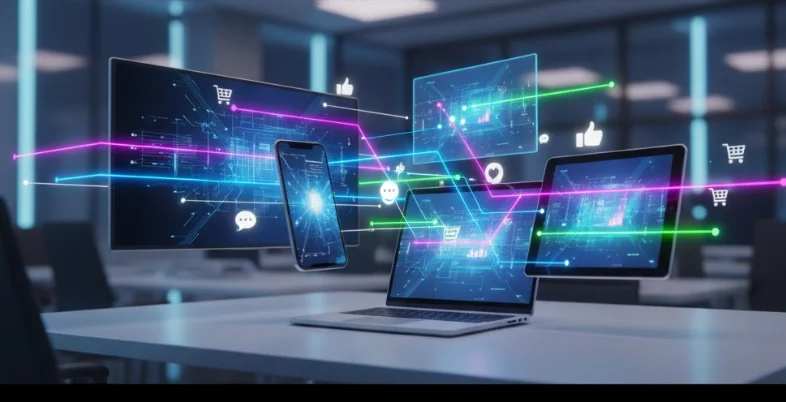
The digital revolution has fundamentally changed the way that consumers find products, research about them, and buy the products. The current customers headlessly move across devices such as smartphones, laptops, social networks, physical shops, and traditional media in the purchasing process. The customer may learn about a product via social media advertisement, do research on an organizational site, read reviews, and finally make the purchase in-store or in a mobile app.
This change in consumer behavior has made single-channel-based marketing approaches obsolete. Phasing out brands that still choose to use a single method of marketing, such as traditional advertising, email marketing, or even social media, is closing themselves off to thousands of potential opportunities to make contact with their audience. Conversely, companies that adopt this multi-channel marketing strategy are putting themselves in a position to reach customers at several locations, creating numerous contact points where prospects will be further directed through the sales funnel.
Multi-channel marketing refers to the strategic process of harnessing the marketing channels available and engaging customers through the use of multiple channels and media. This eliminates the need to place all the marketing eggs in a single basket in favor of a holistic net of affected touch points that interact to create a unified brand experience.
Understanding Multi-Channel Marketing
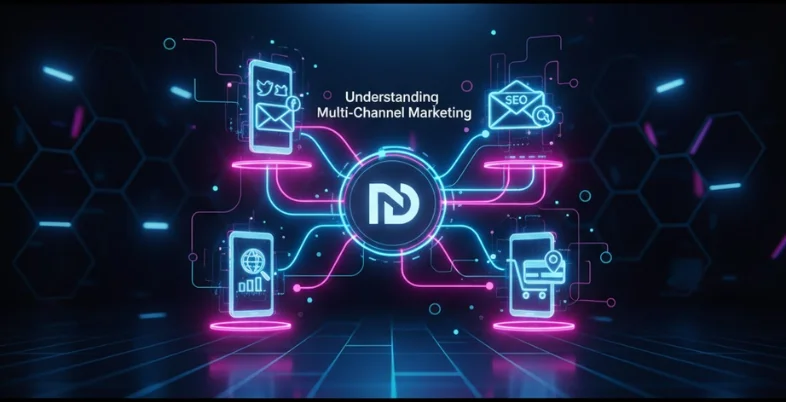
Multi-channel marketing represents a sophisticated approach to customer engagement that recognizes the complex nature of modern consumer behavior. At its core, it involves creating and maintaining a presence across multiple marketing channels—both digital and traditional—to maximize opportunities for customer interaction and conversion.
However, it’s crucial to distinguish between multi-channel, cross-channel, and omnichannel strategies, as these terms are often confused. Multi-channel marketing focuses on being present across various platforms independently, ensuring each channel operates effectively in its own right. Cross-channel marketing takes this a step further by creating connections between different channels, allowing data and insights from one platform to inform strategies on another. Omnichannel marketing represents the most integrated approach, creating a seamless, unified experience where all channels work together as one cohesive system.
The foundation of successful multi-channel marketing lies in adopting a customer-first approach. This means understanding that customers don’t think in terms of marketing channels—they simply want convenient, relevant, and valuable interactions with brands. Whether a customer encounters your brand through a Facebook ad, an email newsletter, or a billboard, they expect consistent quality and messaging that reflects their needs and preferences.
This customer-centric mindset requires businesses to map their marketing efforts to actual customer journeys rather than internal organizational structures. It demands a deep understanding of where customers spend their time, how they prefer to consume information, and what motivates them to take action at different stages of their relationship with your brand.
Expanding Audience Reach With Diverse Channels
The main benefit of multi-channel marketing is that it can encompass a significant increase in the size of the audience by entering different customer segments available in different channels. Varied demography, behavioral patterns, or technical psychographic profiles attract to varied channels and therefore channel diversification remains critical towards extensive market coverage.
Social media, such as Instagram, LinkedIn, TikTok, and Facebook social sites, provide an online marketing touch point with each of them marketing to different audience segments with different content preferences. With search engines, it is possible to capture high-intent level searchers currently in search of solutions, whereas with email marketing, one has the opportunity to engage platform-specific, one-on-one, or even one-to-many customers or prospects. Ensuring a secure WhatsApp login process can also help maintain trust and data integrity for your communications.
Non-digital marketing points of contact are no less important, and include offline media commercials and radio, newspapers, and other offline advertising means, as well as experiences that include event marketing, trade shows, and in-store marketing. Direct mail, out-of-home advertising, and PR campaigns remain significant parts of broader marketing campaigns, especially to access channels that may be overloaded with digital messages.
Take an example of something like Warby Parker, the eyewear company that has transformed the industry due to channel diversification. They started as a direct-to-consumer online brand, which has now grown into the physical showroom, retail partner locations, mobile try-on apps, and hyper-targeted social media campaigns. This multi-channel strategy has enabled them to access the style-aware millennials via Instagram, time-starved professionals via email campaigns, as well as conventional customers via conventional retail/ shopping experience, and thus stealing a market share amongst incumbents.
The solution to effective audience expansion is in the recognition that various channels may attract varying categories of customers, in addition to the realization that an individual customer may not use only a single channel in their journey. It may also involve a business person reading about a product in a LinkedIn article, researching the product over their lunch hour on the company website, and subsequently buying that product using a mobile application during their evening commute home.
Building Consistency in Brand Messaging
Ensuring brand communication consistency across different channels offers a challenge and an opportunity to marketers. Although every channel has its specific benefits and also needs a different strategy, they must have the same base with the brand identity, values, and most important messages, to have a coherent approach, not to frustrate or make a customer feel alienated.
Unified brand identity begins by putting in place tough brand guidelines that extend beyond channels. This will involve imagery such as logos, colour schemes, typography, and voice and tone rules that will allow written and spoken messages to have a genuine sense of brand connection. A customer who is exposed to your brand on Twitter, your television advertisement, and your in-store displays must be able to distinguish them as one at a glance.
However, consistency doesn’t mean identical messaging across all platforms. Multi-channel marketing needs to be managed well with the balance of personalization and consistency, where the brand message is designed to suit the characteristics of the specific channel, and at the same time not to discriminate against the core brand. A company that provides professional services may write informally and visually on Instagram or TikTok than in email newsletters and LinkedIn postings, which are written formally and in greater detail.
The danger of fragmented communication cannot be overstated. When brand messages are in conflict or difficult to connect in multiple channels, the consumers are left feeling confused, with a sense that may challenge trust and credibility. When a company advertises on social media as environmentally friendly, but does not reference sustainability in other advertisements, the company may raise doubts in customers who wonder about the authenticity of the environmental awareness issue.
Successful brands seek a message architecture that allows flexibility within the structure to avoid any form of fragmentation. This entails coming up with core brand messages that are altered but not discarded to channel. A technology organization may have always focused on technology and ease of use on all channels, and vary the technical level and style depending on whether they are writing a detailed paper discussing their technology, a post on social media, or a presentation at a conference.
Choosing the Right Channels for Your Business
The choice of marketing channels should be a strategic move that involves adequate study of the target audience, as opposed to copying trends and actions of competitors blindly. There is a great difference in the best channel mix, depending on the industry, target demographics, business objectives, and resources.
Understanding Audience Preferences and Behaviors
Make thorough research about the customers through surveys, interviews, and their behaviors. This aids in determining the outlets and locations in which the target customers are usually found, how they absorb information, and what drives them to buy. As an example, a B2B firm that sells software products might learn that their audience reads industry publications, attends virtual conferences, and follows the recommendations of their peers, which would imply an emphasis on content marketing, event sponsorship, and advertising on LinkedIn.
Evaluating Potential Channels
In choosing channels, one should think about the proven platforms as well as the emerging opportunities. Through established means, such as Google Ads, email marketing, and Facebook Ads, one can ensure certain ROI and develop targeting ability. Conversely, newer platforms, including TikTok, Clubhouse, or Garrowcast advertising, can provide businesses with early adopter bonuses.
Matching Business Goals With Channel Strengths
The best option to implement in conducting awareness would be high reach of television advertising, partnership with an influencer, or viral social media campaigns. Retargeting advertisements, search engine marketing, or emailing former visitors of the site are all examples of performance-based channels that are better suited to conversion campaigns. To retain and loyalty, the most effective are customer service excellence, exclusive content, and community-defined, including forums or social groups.
Considering Resources and Capabilities
Different channels require varying levels of commitment. Some require sustained content creation, like blogs, social media, or YouTube, and those that require expertise or an extended advertising budget, like Google Ads or programmatic advertising. By focusing on two or three carefully selected channels, small businesses usually attain more results than by diluting resources across a large number of them.
Integrating Traditional and Digital Marketing
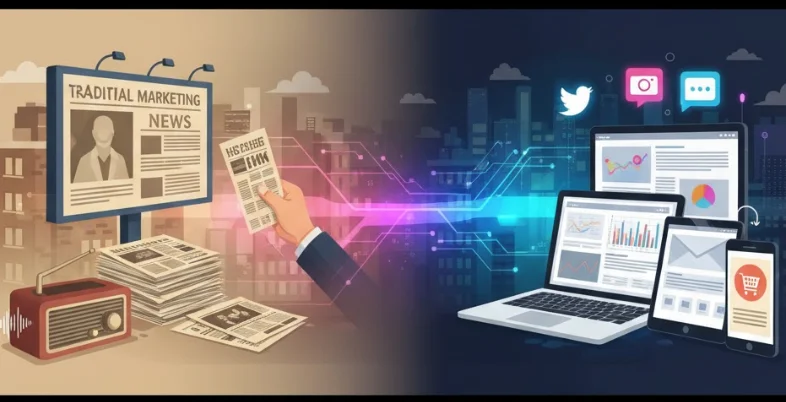
Traditional offline channels still have utility in the multi-channel strategies, even under the conditions of the digital transformation era. Digital and traditional marketing are not competing markets, but they are complementary to each other to have maximum effect. Television, radio, print, direct mail, and outdoor ads have strengths that digital channels simply cannot replicate all the time. Television provides maximum reach and emotional content, print is associated with credibility, radio can connect with commuters, and billboard provides inescapable visibility.
The best results come from integrating both approaches. A television advertisement can turn into online searches, and traditional messages can be strengthened by using digital messages. QR codes and other such tools connect real and virtual worlds effortlessly. In many cases, Nike will use a blend of the two approaches at the same time when launching a product, first creating awareness via TV and billboards, but then using digital advertisements, influencers, and email to create more intense engagement.
In-store activities and applications are part of the experience, and make that experience consistent across integration points. A successful integration is based on a combination of the right time and the right message: the more comprehensive the message, the more it should be promoted through traditional media, whereas more specific attention and the final decision-making need to be provided by digital means. A modern DXP helps unify these touchpoints by delivering consistent, personalized experiences across every channel.
Content Strategy for Multi-Channel Success
Strategic Planning for Multi-Channel Content
The process of coming up with effective multi-channel content takes close planning and effective utilization of resources. One should aim at developing flexible core content rather than developing customized content on each platform.
Identifying Core Content for Repurposing
The repurposing of content will start with research report-type pieces of high value and comprehensive. These may be turned into blog posts, social media graphics, podcasts, video summaries, and email excerpts.
Adapting to Platform-Specific Needs
Repurposing means more than copy-pasting. Each channel demands unique content formats and tone. LinkedIn, Instagram, Twitter, and email platforms are best adapted to different messages: LinkedIn to professional thoughts, Instagram to visuals, Twitter to short messages, and email to long messages.
Optimizing Tone and Format
Adjustments in tone and format maximize impact. As an example, a financial services company might deliver analysis in the form of website whitepapers, social media infographics, and webinar conversations.
Storytelling as a Universal Connector
Storytelling ties content together across all platforms. A customer’s successful story can take the form of a website case study, Instagram posts, YouTube testimonials, and email campaign highlights.
Key Metrics for Measuring Campaign Success
Measuring multi-channel marketing success goes beyond tracking isolated metrics. It needs to hit the mark, balance engagement and conversions, long-term brand impact, and employ best-in-class attribution models to see how channels interact.
Comprehensive Approach to Measurement
Effective multi-channel marketing can be measured by both the channel-specific performance and by measuring campaign impact overall. Single-channel metrics alone provide an incomplete picture.
Engagement Metrics
Engagement reveals content resonance and audience interest. The information displayed on social media is insightful, with the likes, comments, shares, and click-through rates. The effectiveness of email marketing activities can be determined by the open rates, click rates, and read time on a particular email, whereas website analytics provides page views, bounce rates, and session duration.
Conversion-Focused KPIs
Conversion metrics highlight business impact. These are the sales revenue, leads generated, sign-ups, and the ROI. Attribution modeling is particularly important in this case, as customers frequently use more than one avenue before converting, and it is therefore helpful to understand how the impacts of touchpoints interact.
Long-Term Metrics
Long-term measurement emphasizes retention and brand building. Customer lifetime value, retention, repeat purchase habits, the brand recognition survey, and net promoter scores indicate how successful the campaigns will be in the years to come. These are useful metrics, especially to businesses with a long sales cycle as well as to subscription-based businesses.
Advanced Attribution Models
Advanced analytics tools enable sophisticated attribution modeling. First-touch attribution highlights media that are most effective in generating preliminary awareness. Last-touch attribution identifies the channels that drive final conversions. Multi-touch attribution is designed to provide the most comprehensive view, quantifying every one of the customer touch points.
Best Practices and Strategies for Multi-Channel Campaigns
Most valuable principles that allow companies to achieve success in their multi-channel marketing implementation include, but are not limited to: These best practices lay out structures in strategic decision-making and the tactical implementation process in various channels of marketing.
Audience Insights as the Foundation
Effective multi-channel strategies begin with comprehensive audience understanding. This would involve carrying out research, based on demographics, psychographics, behaviours, and the preference of channels, carried out through surveys, interviews, focus groups, and data analysis. Since audience behaviors evolve, this research must be ongoing.
Aligning Campaigns with Goals
All the channel activities must be in sympathy with crystal clear, quantifiable business outcomes like awareness, lead generation, conversion, or retention. Assigning roles and the measure of success of each channel will reduce the aimless scramble and blooming consideration.
A/B Testing and Experimentation
Building a culture of experimentation strengthens multi-channel efforts. Through message, creative, timing, and target testing, businesses are able to determine what messages and strategies can best resonate across platforms and instantly adjust strategies accordingly based on performance and real-time market changes.
Continuous Feedback Loops
Cross-channel feedback enables optimization. Strategies in other channels can be guided by the high-performing content, and the underperforming content can be enhanced easily. Regular reviews help identify patterns and growth opportunities.
Role of Technology Integration
Managing multi-channel complexity relies on integrated technology. Marketing automation and CRM software, analytics platforms enable proper coordination, consistency of data, and provide performance analysis. However, technology should enhance strategy rather than dictate it.
Future of Multi-Channel Marketing
Technology and changing consumer behavior are putting the pace of multi-channel marketing evolution mainly in hyperdrive. Machine learning and AI can hyper-personalize to make accurate predictions of customers’ preferences and dynamically adjust content and content delivery across touchpoints without placing significant resource demands.
Smart speakers and voice search are transforming the discovery and buying process, and brands must adapt to voice commands and create audio-centric strategies. As well, AR and VR are fusing the digital and physical worlds, providing opportunities to demo products and create virtual showrooms and engaging content.
Strategies are moving towards privacy and data protection with the removal of third-party cookies and an increase in regulations. It is the task of brands to turn to the side of first-party data and provide their customers with real value to be trusted. The new engagement points, such as smart devices, wearables, and automotive integrations, also add several ways to engage, but marketers have to be selective with the technologies they adopt because they should fall squarely within the audience and business objectives.
Conclusion
The multi-channel marketing is no longer a competitive advantage but a must in the modernized connected world. It has advantages that are not limited to a larger reach of impressions, allowing better customer experiences, brand consistency, increased insights, and protection against market shocks or platform changes.
Effective ones will maximize reach because they will reach customers on their preferred platforms and maintain the same message in order to create awareness and trust. Multi-channel efforts generate a greater ROI compared to single-channel efforts because touchpoints collaborate to move customers through a complicated sales process.
The effectiveness does not depend on the quantity of channels, but on the quality of their integration in order to satisfy the needs of customers. The brands that lead in the future will adopt flexibility, an oriented mindset, and view channels as a coherent ecosystem instead of separately operating silos.
Technology is changing, and the principles stay the same: learn about audiences, provide consistent value, and optimize using data-driven insights. The future lies in investment in multi-channel capabilities, a multi-channel strategy, as well as a multi-channel team and technology. Those companies that excel at effortless cross-channel personalization experiences will sustain competitive customer wins on each acquisition, retention, and lifetime value.
FAQs
Define Multi-Channel Marketing?
Multi-channel marketing involves the promotion of a brand on more than one channel/platform, i.e., across social media, email, websites, print, TV, or in-store, and ensuring that brand messages and customer experience are relevant across each medium.
What is the Importance of Multi-Channel Marketing?
It enables businesses to connect with customers where they need it, gain exposure, enhance interactions, and provide a frictionless experience among various touchpoints, resulting in increased conversions and brand loyalty.
What does Multi-Channel Marketing Mean when Compared with Omni-Channel Marketing?
The main difference between multi-channel marketing and omni-channel is that the latter emphasizes the complete unification of platforms to offer a smooth route and uniform experience to a customer throughout.
What are the Major Multi-Channel Marketing Challenges?
The obstacles will be to maintain a keen message, negotiate data among the platforms, evaluate cross-channel efficiency, and distribute the resources without becoming overstretched.
What are the Ways of Quantifying Success in Multi-Channel Marketing?
The measurement of success can be done in terms of engagement rate, conversions, ROI, customer lifetime value, and attribution models, demonstrating the contribution of various channels in the customer journey overall.