
Campa Cola is re-entering – and this time with the full clout of Reliance Industries. The iconic Indian soft drink brand has received a dramatic nationwide reintroduction after being purchased by Reliance Consumer Products in 2022 for ₹22 crore, putting it directly up against international giants such as Coca-Cola and Pepsi.
Reliance’s disruption strategy, the Jio-style, based on fierce ₹10 pricing on 200ml bottles, is quickly gaining market share in price-sensitive rural and Tier-2 markets. To an entrepreneur, this is an opportunity of a lifetime to be affiliated with one of the most formidable conglomerates in India in a high-growth industry. As Reliance aims to have a 25% national market share by 2027, the total Campa Cola Franchise Cost & investment will be between ₹1.5 lakh and 35 lakh+ with a profit margin of 12% to 25%, based on your preferred business model.
Let’s explore Campa Cola Franchise profit & ROI in depth!
Brief History of Campa Cola and its Nostalgic Appeal
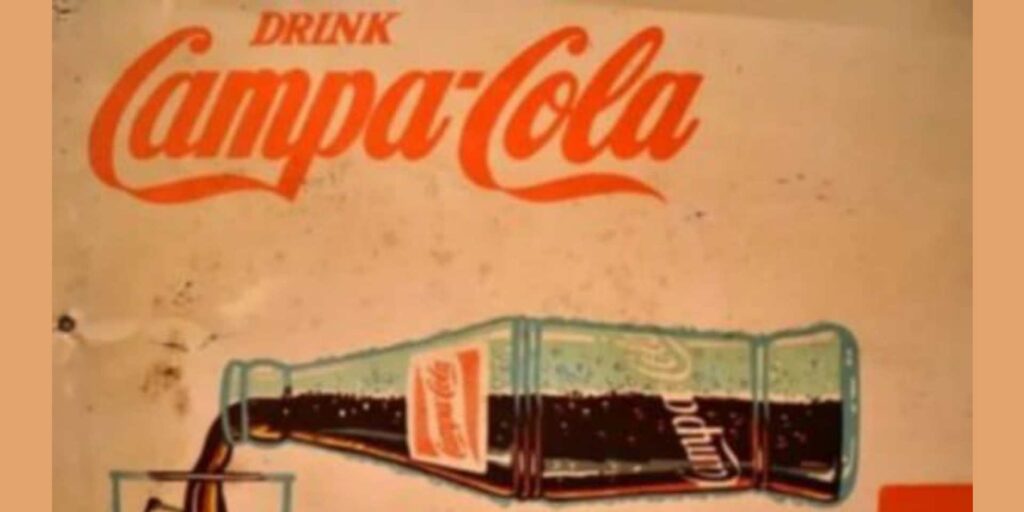
Millions of Indians feel a connection to Campa Cola as a brand that shared a missing piece of our younger selves. In the 1970s, it was quick to earn the title of a household name, associating it with refreshments and independent Indian identity in the soft drink market. In an age when multinational brands had not yet made their way in, Campa Cola did well, even growing to become the “choice of a nation!” Orange and lemon flavors that popped so vibrantly against the classical cola had resonated deeply within consumers’ hearts and made its users generations of loyal fans.
But with the globalization of the Indian economy in the early 1990s, Big global brands like Coca-Cola and PepsiCo re-entered the market with huge marketing budgets, strong nationwide distribution channels, and a product portfolio wider than any local competitor. These were giant international players that Campa Cola could never match, and it finally faded away from the mainstream, but for many, it became the stuff of memory.
In 2022, Reliance Consumer Products Ltd (RCPL) brought back the brand in a big way. Capitalizing on a deep-rooted recall of this brand in India and a price-sensitive Indian consumer base, Reliance, known for its disruptive strategy across almost all businesses, saw an opportunity to revive Campa Cola from the brink of death and restore it to what it used to be , much like a Zero Investment Franchise opportunity that attracts entrepreneurs with strong brand value. There was tremendous excitement about the relaunch, and it was leveraging the emotional connection every Indian still had to the brand.
The nirvana appeal, combined with a highly competitive pricing strategy, has been instrumental in Campa Cola’s rapid establishment, making it a most tempting proposition for prospective franchisees.
Financial Performance and Growth of Campa Cola in India: 2026 Insights
The resurrection of Campa Cola by Reliance has been no ordinary affair. Within just 18 months of relaunch, annual revenue crossed the ₹1,000 crore milestone — driven by Reliance’s massive marketing push, including a ₹200+ crore co-sponsorship of IPL 2026.
By early 2026, Campa Cola had expanded its national market share from a modest 2% to over 7%, with double-digit presence in major urban centres. Made in India and the price break of ₹10 is still resonating in the rural and Tier-2 markets. Backed by an ₹8,000 crore manufacturing investment and international expansion into the UAE and Nepal, Campa Cola is firmly on track toward its ambitious 25% national market share target.
About Campa Cola Business Opportunity
Reliance Consumer Products acquired Campa Cola in 2022 and immediately positioned it as India’s homegrown answer to global beverage monopolies. Using its pan-India distribution system and extensive retail presence achieved via JioMart and Reliance Retail, the company implemented an aggressive pricing approach, selling 200ml bottles at ₹10, to out-price the competitors and conquer Tier-2 and rural markets similar to strategies often discussed in a List of Government Franchises for wide market penetration.
The outcomes have been impressive, with revenue exceeding ₹1,000 crores in only 18 months. The 2026 expansion plans are to invest ₹8,000 crore to establish 10-12 additional manufacturing facilities and expand internationally into markets such as the UAE and Nepal, achieving full coverage of the country by 2027.
Why Invest in a Campa Cola Franchise?

Campa Cola franchise cost in India presents a compelling business opportunity for several reasons:
- Strong Brand Recognition and Nostalgia: Campa Cola, as mentioned above, is not a new brand per se, but has been around for decades. The fact that this inherent brand recognition eliminates the need for this new product to an enormous amount of marketing work; this potentially launches the product to a whole new height (literally). An already anxious market is ready with nostalgic appeal among older generations and curiosity among younger consumers.
- Backed by Reliance Retail: Reliance Retail, one of India’s largest and most diversified retail conglomerates, backs it. This is perhaps its biggest advantage. It means unparalleled logistical support, financial stability and access to an exponentially larger distribution network. Reliance’s strong financial muscle and packed market penetration strategies provide enormous credibility and support to Campa Cola franchisees.
- Disruptive Pricing Strategy: Reliance is aggressively pricing Campa Cola franchise costs, setting prices vastly lower than those of established international brands. For instance, there is a “value-for-money” proposition that strongly resonates with the bulk of Indian consumers, especially in value-averse rural markets, thereby driving higher sales volumes.
- Growing Indian Beverage Market: The non-alcoholic beverage Market in India is growing due to rising Indian Disposable Incomes, Urbanisation, and a Young population. The opportunity for beverage brands like Campa Cola is expansive, and more consumers are willing to try these products for the first time.
- Wide Product Range: The company isn’t just concerned with mass-producing its classic cola — it also offers orange and lemon. This portfolio offers a place within a portfolio that could be appealing to a broader market segment with more diverse consumer preferences. Sources also tell us that Reliance is diversifying its beverage offerings with products such as Campa Energy and a new sports drink called Spinner, which would further enrich the franchise’s product range.
Campa Cola Distributorship vs. Franchise
| Feature | Distributorship | Franchise (Retail Outlet) |
| Primary Role | Supply products to retailers/dealers across a district | Direct-to-consumer sales via a branded shop |
| Investment | ₹15 lakh – ₹35 lakh | ₹1.5 lakh – ₹3.5 lakh |
| Profit Margin | 11% – 15% (on high-volume sales) | 20% – 25% (on per-unit MRP) |
| Space Required | 1,500 – 2,500 sq. ft. (warehouse-focused) | 200 – 400 sq. ft. (prime retail location) |
| Territory Rights | Exclusive rights for an entire district | Exclusive 2–5 km radius |
| Best For | Entrepreneurs with logistics/FMCG experience | Small business owners in high-footfall areas |
Types of Distributorship Provided by Campa Cola
Retail Dealership
Ideal with local-area entrepreneurs. Dealers operate within a given territory and they have branding assistance sponsored by the company and one employee is sponsored by the company to help with the operations. Minimal entry requirements and ₹5-7 lakh investment.
District Distributorship
Grants monopoly rights in a district. Requires higher capital (₹15–35 lakh) to manage bulk inventory and a delivery fleet for supplying local retailers. Qualified to receive volume incentives and trade promotions.
Super Stockist
Works on a multi-district level as the key connecting element between the manufacturing plant and local distributors. Needs huge capital (₹35-55 lakh) and a huge warehouse space (2500+ sq. ft) to serve high-volume throughput.
C&F (Carrying & Forwarding) Agency
The top-level model prioritized the state-level logistics and inventory flow, instead of direct sales. Investment exceeds ₹80 lakh. Commission-based on volumes dispatched and earnings; perfect in the case of established logistics operators.
Campa Cola Franchise Cost Breakdown Table 2026
It depends on the model (dealer or super stockist), the applicant’s geographical location, the scale of operations, and the applicant’s personal requirements, but it may cost you Rs. 5 lakh to a maximum of Rs. 7 lakh. Investment can range from ₹5 lakh to ₹50 lakh, generally.
Retail Dealership Cost
| Cost Component | Approximate Amount |
| Registration Fee | ₹35,500 + GST |
| Security Deposit (Refundable) | ₹2,80,000 |
| Initial Inventory | ₹2,00,000 – ₹2,50,000 |
| Setup & Equipment (Fridge/Display) | ₹25,000 – ₹60,000 |
| Total Estimated Investment | ₹5 lakh – ₹7 lakh |
Distributorship Cost
| Cost Component | Approximate Amount |
| Registration Fee | ₹69,500 + GST |
| Security Deposit (Refundable) | ₹4,60,000 |
| Initial Inventory | ₹5,00,000 – ₹8,00,000 |
| Cold Storage & Infrastructure | ₹1,00,000 – ₹2,50,000 |
| Total Estimated Investment | ₹15 lakh – ₹35 lakh |
A. Breakdown of Investment:
Here’s a breakdown of the typical investment components:
- Initial Security Deposit/Franchise Fee: For the rights to distribute Campa Cola products in a given territory, a company pays in advance a refundable or non–refundable amount. This varies by location and by the agreement. It may be lower for dealerships, a lot for super stockists.
- Initial Stock Purchase: The initial stock purchase is big. Initially, you need to Campa Cola Franchise Cost invest a minimum of ₹1.5 lacs for initial stock that would be able to cover a few thousand crates of products. Super stockists will have to invest a very hefty amount starting from ₹50 lacs as their initial stock.
- Infrastructure Setup: First, you need to have the Infrastructure Setup, for that you need to have a place to store inventory and your office operations. If you were a dealership, a basic space would be about 500 – 1000 sq. ft. It could be a rented or owned property. With higher volumes, a warehouse space of 2000 – 5000 sq. ft. or higher is required for a super stockist. This can run anywhere between ₹1.5 lakh.
- Commercial Vehicles: You will need delivery vehicles. The cost will depend on how many vehicles and what type you need to run according to your distribution route and territory size. One commercial vehicle costs about Rs 6 lakh.
- Working Capital: Managing the day-to-day operational expenses is important. It includes staff salary bills (sales executives, delivery men, warehousemen), electricity bills, fuel costs, vehicle servicing, and other miscellaneous expenses. Generally ₹2 lakh is enough as a working capital to take care of the initial business expenses until sales become stable.
- Licensing and Registration: Get all necessary business licenses, including the FSSAI (food safety and standards) license, GST registration, trade license, etc., as required for the beverage distribution business in your area. The costs of these things depend on state regulations.
Campa Cola Franchise Profit Margin
A Campa Cola dealership or distributorship usually earns a 10%- 15% profit margin on sales. But sustainable and substantial profits are, however, dependent on a few factors.
Investment & Profit Overview Table
| Model | Total Investment | Profit Margin | Territory |
| Retail Dealership | ₹5 lakh – ₹7 lakh | 20% – 25% | Local area / ward |
| District Distributorship | ₹15 lakh – ₹35 lakh | 11% – 15% | Entire district |
| Super Stockist | ₹35 lakh – ₹55 lakh | 8% – 12% | Multi-district |
| C&F Agency | ₹80 lakh+ | Commission-based | State-wide |
Revenue Streams:
- Product Sales: The main source of revenue is selling Campa Colas (including cola, orange, lemon drinks), plus new products, to retailers, wholesalers and other buyers in your territory.
- Volume-Based Incentives/Discounts: Selling greater quantities often means the company might reward you with more incentives or earn you improved margins.
- Promotional Activities: If you join company-organized promotional campaigns, you may receive extra rewards.
Key Factors Affecting Profitability:
- Sales Volume: Sales volume is the most important aspect. Campa Cola gains much of its sales by charging fairly low prices. Increased sales lead to higher gross profit.
- Market Penetration and Reach: How well you reach stores and maintain product availability in your area will increase sales.
- Competition: While Campa Cola offers prices at different levels, the Indian beverage industry is highly competitive. It is key for you to take on your competitors and ensure good relationships with customers.
- Seasonality: When it’s sunny and warm, the number of soft drinks sold often increases. You should adjust your inventory and sales methods to align with seasonal patterns.
- Trade Schemes and Discounts: How much Campa Cola and any trade discount programs can save you will influence your profits.
- Operational Costs: The overall financial picture is affected by your rent, employee costs, utilities, vehicle costs, and marketing investments.
Realistic Profit Projections:
The exact figures depend on the points discussed before, yet sources suggest that by aiming for 300-350 crates daily, with each crate making a profit of ₹40, the daily gross profit could be between ₹12,000 and ₹14,000, which adds up to a monthly gross profit of roughly ₹3,60,000 to ₹4,20,000. All your operational costs are deducted from your gross profit to arrive at your net profit.
You should prepare a detailed financial projection that fits your company, location, customer base, and operational plans. Campa Cola emphasizes sales volume rather than high individual profit at first, mainly because its product is priced at ₹10. As a result, strong distribution and consistent sales play a major role in achieving significant profits.
Eligibility & Requirements of Campa Cola Franchise
People or companies who want to deal in Campa Cola as dealers or super stockists must meet certain eligibility criteria and fulfill specific requirements.
Eligibility Criteria
- Age: 21-60 years old.
- Education: 10 th grade (SSC) pass.
- Identity Evidence: Certified Aadhaar Card and PAN Card (individual or registered company)
- Business Registration: An active GST number and a Shop/Trade License are required.
- Space: Commercial space that is owned or rented – dealership (min. 900 sq. ft.), distributorship (min. 1,500 sq. ft.)
- Experience: Preferred but not required previous experience in FMCG, beverages or retail distribution.
- Financial Situation: Sufficient working capital to cover early inventory turnover.
Eligibility Criteria:
- Business Acumen and Experience: Little or no formal experience is usually OK, but prior knowledge of FMCG distribution, sales, or similar roles can be very helpful. Every owner should learn about business activities, sales and logistics.
- Financial Capability: You should have enough money to make the initial investment and sufficient working capital to sustain your business. Usually, a business must demonstrate financial stability.
- Market Knowledge: You need to know everything about the local market, like what buyers like, who your rivals are and how products can be sold.
- Legal Compliance: The applicant needs to be qualified legally to serve customers in India which covers being the required age and having a clean criminal record.
- Commitment to Brand Values: Sticking to Campa Cola’s brand ideals, quality policies, and ethical behaviors is required.
Key Requirements:
- Commercial Space: Space set aside for important business-related duties. Away should have a safe and appropriate place to keep its products. This place must be set up with particular needs for holding beverages in mind (e.g., guarded from direct sunlight, with suitable ventilation).
- Commercial Vehicles: A sufficient number of trucks and vans are needed to serve your customers effectively.
- Manpower: A group of sales executives, delivery workers and individuals in the warehouse. The size of your team will be determined by the scale of your operations.
- Legal Documents & Licenses: You should register your business as either a Sole Proprietorship, Partnership Firm or Private Limited Company.
- Financial Statements: Along with providing a bank statement or balance sheet, you might need to offer other financial documents to show your financial ability.
How to Apply for a Campa Cola Dealership in 2026
The process for becoming a Campa Cola dealership or distributor is often straightforward, thanks to digital tools. Let’s walk through the steps one by one.
Visit the Official Website.
Go to the Campa Cola website (or its parent company, Reliance Consumer Products). And fill the contact form.
Complete the Required Information on the Online Form.
Fill in the necessary details in the online registration form as correctly as possible. Usually, you should cover the following points:
- Your contact information, name and address.
- When looking at a business, you need to consider the type of business, your past experience in a similar field, and the financial support you have.
- The address where the dealership may be built is given here.
- Is your company interested in becoming a dealer, distributor, or super stockist?
- Information on your commercial premises, such as whether you’re the owner or renter, and its square footage.
Submit Required Documents:
You will most likely be able to upload the required documents (like PAN Card, GST registration, address proof, bank statements and agreements with your shop) when filling in the form online. Ensure all documents are written clearly and easily read.
Wait for Confirmation and Verification:
- When you submit your application, you will usually get an email confirming your submission.
- Your application will first be reviewed by the company’s Customer Relationship Management team or a specific franchise/dealership department.
- The bank may ask you to verify the details they have. It could look like making phone calls, sending emails or trying a quick video call.
Site Inspection and Interview
- Shortlisted applicants are usually asked by Campa Cola or Reliance Retail to visit your proposed warehouse or office site. They will review how well-suited the data center is, how much space is available, and what technologies are present.
- Sometimes, you might meet face-to-face to present your business ideas, research and devotion.
Ready to Launch.
Once the contract is signed and everything is in order, Campa Cola could instruct you in product knowledge, sales techniques, how to operate and the required reporting procedures.
Campa Cola Franchise Contact Details
You can find the latest contact details for Campa Cola franchise or dealership on the official website. The contacts provided by the reliance group are reliable because Campa Cola is run by Reliance Consumer Products Ltd. (RCPL).
Below we outline a few general strategies to obtain contact information and we add findings from the most recent search:
- Official Website: https://rcplbrands.com/
- Email: contact@rcpl.co.in
- Reliance Retail’s Corporate Website: Visiting Reliance Retail’s corporate website in the consumer products section may give you the information or form needed to make your inquiry.
- Direct Inquiry: If there’s a Reliance Retail Store near you, you might ask about becoming a dealership.
- Industry Events/Trade Fairs: On occasion, chain companies take part in franchise events or trade exhibitions so you can speak to their representatives.
Pros and Cons of Owning a Campa Cola Franchise
After Reliance Retail revived Campa Cola, owning a franchise comes with certain special pros and cons. Anyone considering a business should carefully consider these before making a decision.
Pros:
- High Brand Recognition and Nostalgia: Many Indians recognize and love Campa Cola because of its strong, familiar image. So, from the beginning, sales improve since consumers already know and like the product. Older games sometimes make people want to make a first buy because of their nostalgia.
- Backed by Reliance Retail: Reliance Retail’s backing is probably the biggest strength. The global company’s immense financial means, strong retail presence, and active market approach provide excellent support to all its partners. It decreases business risk and provides resources that only collaborative businesses can use.
- Disruptive Pricing Strategy: By offering its 200ml bottles for just ₹10, Campa Cola can go toe-to-toe with competitors in India, where cost often matters most. As a result, companies enjoy rapid sales growth and success in competing for market share.
- Growing Beverage Market: With more cities, rising income levels, and a young population, India’s soft drink market is steadily growing.
- Diverse Product Portfolio: In addition to cola, Campa Cola offers orange and lemon flavors, aiming to appeal to a broader consumer base. New products introduced by Reliance broaden its variety of offerings.
Cons:
- Thin Profit Margins per Unit: Although the winery’s profits rise with production, the profit margin on each bottle is quite low. For this reason, achieving profitability requires generating a lot of sales.
- Intense Competition: Campaigning for success is tough as Campa Cola cannot compete with leading global brands who have many resources, strong networks and many loyal customers.
- Reliance on Volume: The company’s success is mostly tied to hitting and sustaining top sales figures. When demand drops or the company loses market share, its profits can decline as well.
- Operational Demands: Managing a distributorship needs careful attention to inventory management, logistics, warehousing, sales team management and many retail partnerships.
- Capital Investment: Though many describe retailing as a “low investment” business, the initial cost, including funds for stock, transport and infrastructure, can be quite high for a super stockist.
Also Read: La Pinoz Franchise Cost in India
Real vs. Fake Franchise Warning of Campa Cola Franchise
With the rising popularity of Campa Cola, many fake websites, WhatsApp numbers, Telegram groups, and social media pages have started claiming to offer Campa Cola franchise, distributorship, dealership, or agency opportunities. Many people are being asked to pay registration fees, security deposits, or booking amounts. Be careful—several such offers may be scams.
In 2023, reports stated that Reliance Consumer Products Limited filed complaints about a fake Campa Cola website, fake bank accounts, and fake email IDs allegedly collecting money under the guise of dealership registrations.
Conclusion
Reliance Retail, with its strong vision and resources, is bringing back Campa Cola, marking a key development in the Indian soft drinks sector. Campa Cola has grown from being a cherished memory to a major player once again, taking 10% of the market and preparing to see its income rise by an impressive 150% to ₹10 billion in the fiscal year underway. This impressive recovery, supported by a different pricing method and good product distribution, gives a good reason for new entrepreneurs to be interested in the Indian soft drink industry, which is set to reach USD 80.1 billion by 2024.
Even so, anyone hoping to start a franchise must be aware of the possible difficulties. There is a lot of competition in the Indian beverage industry, mainly due to large worldwide firms already operating in the market. Operational efficiency and inventory control must be near-perfect, along with a drive to enter and influence the largest number of markets, in this type of business system. Even though it can yield large rewards, the first money invested in Real Estate requires careful planning. Besides, the business experiences seasonal ups and downs and adheres to the guidance set by the corporate entity.
Also Read:
FAQs
What is the starting cost to become a Campa Cola franchisee in India?
Buying a Campa Cola franchise (dealership/distributorship) in India will usually cost from ₹5 lakh to ₹50 lakh.
How much profit might I make with a Campa Cola franchise?
A Campa Cola outlet typically makes a 10% to 15% profit on each sale.
What process do I have to complete to become a Campa Cola dealer?
You should visit the official websites of Campa Cola or Reliance Consumer Products, locate the “Franchise” or “Distributorship” section, and use the online form to request a dealership.
What help does Campa Cola give to its franchisees?
Campa Cola is supported by Reliance Retail, with brand recognition, marketing support, a strong product supply chain and logistics, operational advice, and sales support.
How can I apply for a Campa Cola distributorship in India?
For any applications to become a Campa Cola distributor, one can get in touch with Reliance Consumer Products Limited via their website. One needs to provide details about one’s business along with location and financial capability to invest.
Is Campa Cola franchise profitable in 2026?
Indeed, Campa Cola franchise is profitable because of the robust distribution channel, pricing, and increasing awareness of the brand name of Reliance. The margin of profit of beverage wholesalers is between 10-20%.